 Save
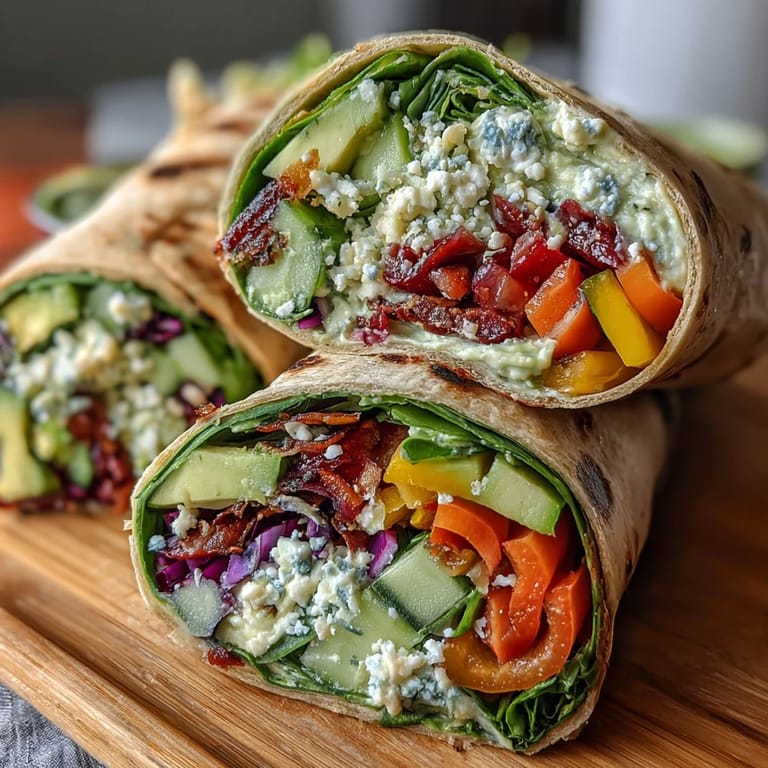
Save My daughter came home from school asking why her lunch box always looked so boring compared to her friends'. That question led me to the kitchen on a rainy Tuesday afternoon, armed with every vegetable I could find and the determination to make something that would actually make her excited about lunchtime. These rainbow wraps became our solution, and honestly, they've become my go-to answer whenever someone needs a lunch that's as fun to look at as it is to eat.
I'll never forget the day my son first unwrapped one of these at his desk and his whole table gathered around asking what smelled so fresh and crisp. He went from hiding his lunch box to proudly showing it off, and that moment made me realize this wasn't just about nutrition—it was about confidence and joy wrapped up in a tortilla.
Ingredients
- Large whole wheat tortillas: These are your blank canvas, sturdy enough to hold all the vegetables without tearing, and they add a nutty flavor that complements everything inside.
- Hummus: It acts as both moisture and binding agent, keeping everything cohesive while adding protein and flavor—roasted red pepper or garlic varieties work beautifully if you want to switch things up.
- Red and yellow bell peppers: Slice them thin enough that they fold easily but thick enough to maintain their satisfying crunch through lunchtime.
- Carrot: Julienne it so the pieces are thin and delicate, making each bite manageable and the carrot less likely to poke through the wrap.
- Cucumber: The moisture from cucumber is your friend for keeping everything fresh, though pat it dry with paper towels if it's particularly watery.
- Purple cabbage: This adds color, crunch, and a mild sweetness that balances the earthy vegetables—plus it stays crisp for days in your lunch box.
- Baby spinach: Tender enough to fold without bruising, spinach adds iron and nutrition without any bitter taste when raw.
- Fresh parsley or cilantro: A small handful brings brightness and aromatics that make the whole wrap feel fresher.
- Avocado: Slice it just before assembling to prevent browning, and it adds creaminess that makes the texture experience complete.
- Crumbled feta cheese: The tanginess cuts through the vegetables perfectly, though you can swap it for any cheese you prefer or skip it entirely for dairy-free.
Tired of Takeout? 🥡
Get 10 meals you can make faster than delivery arrives. Seriously.
One email. No spam. Unsubscribe anytime.
Instructions
- Lay and spread:
- Place your tortilla on a clean, flat surface and use the back of a spoon to spread hummus in an even, thin layer across the whole thing, leaving just a finger's width border so nothing squishes out when you roll. The goal is coverage, not thickness—you want to taste it but not fight through it.
- Create your rainbow:
- Arrange your vegetables in horizontal rows across the center of the tortilla, starting with the reds, then yellows, oranges, purples, and greens—this visual moment is half the magic of these wraps. Take a breath and enjoy how beautiful it looks before moving on.
- Add toppings:
- Sprinkle your herbs, avocado, and feta over the vegetable rows, distributing them evenly so each bite has a little bit of everything. Don't over-stuff—the key is balanced layers, not a overstuffed mess.
- Fold and roll:
- Fold the left and right sides of the tortilla inward about an inch, then starting from the bottom, roll it away from you as tightly as you can manage without tearing. The side folds trap everything inside and prevent the filling from tumbling out when you bite into it.
- Repeat the magic:
- Make your remaining three wraps the same way, keeping a rhythm so they all come together at about the same time. It's meditative once you get the hang of it.
- Wrap and transport:
- Slice each wrap diagonally (it just looks nicer and is easier to hold), then wrap each half snugly in parchment paper or foil for transport. The tight wrap keeps everything compressed and prevents sogginess during the day.
 Save
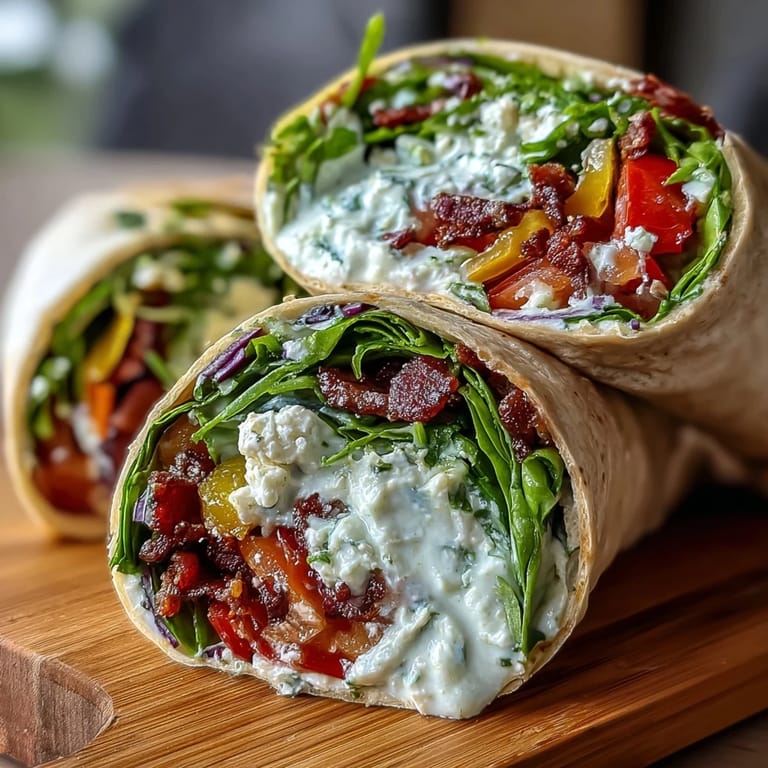
Save There was a moment last week when my daughter asked me to make extra wraps for her study group, and watching four teenagers silently eating lunch while discussing their project, occasionally commenting on how good everything tasted, made me understand the real value of food. It's not just nutrition—it's the quiet confidence that comes from caring about what we give to the people we love.
Variations That Actually Work
Once you make these a few times, you'll start seeing them as a template rather than a strict formula. I've done versions with grilled chicken breast sliced thin, roasted tofu cubes for extra protein, or even swapped the hummus for a creamy tahini dressing when I'm feeling adventurous. The beauty is that almost any vegetable works—roasted red peppers from a jar, shredded zucchini, thinly sliced radishes, or even some tender broccoli florets if you're feeling experimental.
The Packing Strategy
I learned early on that how you pack these matters almost as much as how you make them. If you're taking them to school or work, parchment paper keeps them from getting soggy and makes unwrapping feel special rather than messy. A small container of extra hummus or a tahini drizzle on the side means you can add moisture right before eating if things have dried out a bit during transport, and keeping the avocado separate until lunch time prevents that sad brown situation.
Make It Your Own
The most important thing I've learned is that these wraps are infinitely flexible, so don't be afraid to swap things based on what's in your fridge or what your people actually enjoy eating. My son refuses cucumber but loves extra carrots, so his wraps are heavy on the julienned vegetables. My husband adds hot sauce to his hummus spread, and my daughter sometimes swaps the feta for a handful of sunflower seeds for extra crunch. That flexibility is what keeps these from becoming boring, even when you make them three times a week like we do.
- Make a spreadsheet of vegetable combinations you love and rotate through them so you never feel stuck in a rut.
- Keep pre-cut vegetables in your fridge on Sundays and these come together in under five minutes on busy weekday mornings.
- Toast your tortillas lightly in a dry pan if you want them to hold up better during transport, though it does change the texture slightly.
 Save
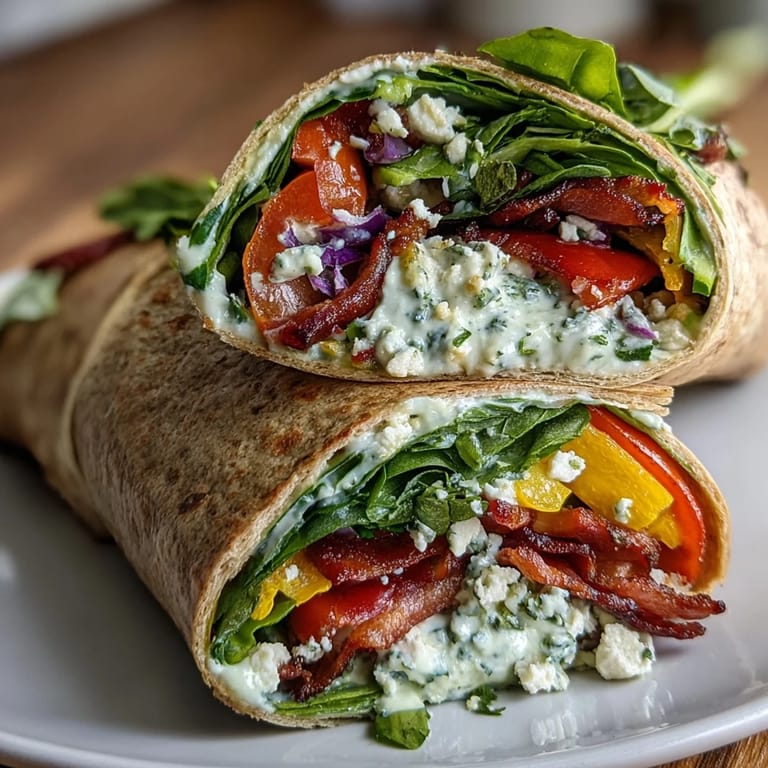
Save These wraps have become my answer to so many lunch questions, and I hope they become yours too. There's something quietly powerful about sending someone out into their day with food you made with care, and these colorful little packages somehow manage to do exactly that.
Recipe FAQs
- → What is the best way to keep the wraps fresh?
Wrap the filled tortillas tightly in parchment paper or foil and store them in an airtight container in the refrigerator until ready to eat.
- → Can I substitute the hummus with other spreads?
Yes, alternatives like cream cheese, dairy-free spreads, or flavored nut butters work well to add moisture and flavor.
- → Which vegetables provide the best crunch for these wraps?
Bell peppers, cucumbers, carrots, and cabbage all provide a crisp texture that contrasts nicely with soft greens and spreads.
- → Are these wraps suitable for a vegetarian diet?
Absolutely, this combination is naturally vegetarian and nut-free, with optional cheese or avocado for added richness.
- → How can I add more protein to these wraps?
Try adding grilled chicken strips, tofu, or extra crumbled feta to boost the protein content while keeping the wrap flavorful.