 Save
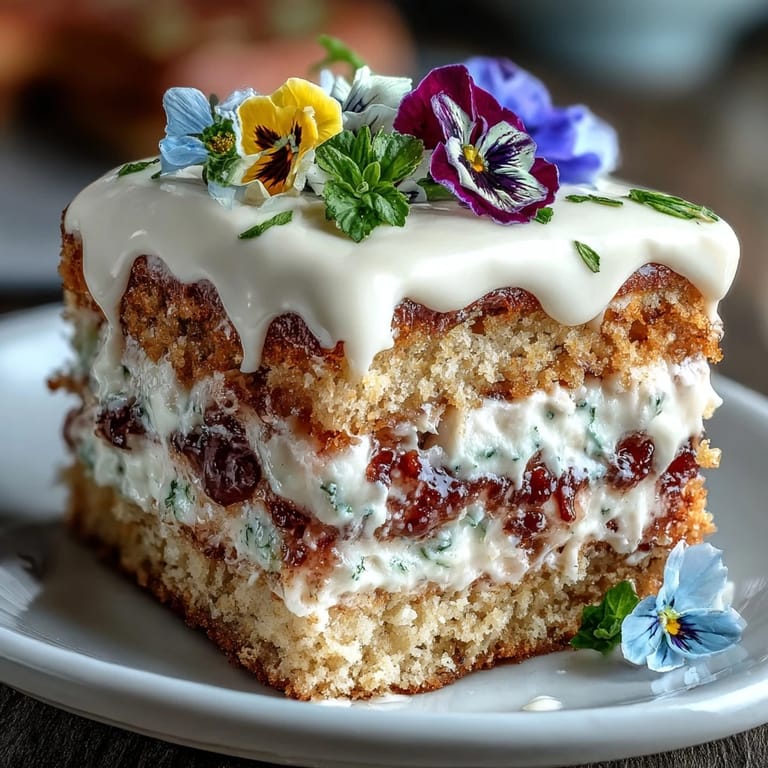
Save My sister texted me a photo of a garden overflowing with violas the week before her birthday, and something clicked—she needed mini cakes that looked like spring itself. I'd never attempted edible flowers before, but watching her face when those delicate blooms caught the light made every nervous moment in the kitchen worth it. The vanilla and lemon sponge turned out feather-light, the buttercream whipped up like clouds, and suddenly I understood why people get excited about decorating desserts. These little layer cakes aren't just pretty; they taste like celebration tastes.
I assembled these while my roommate made coffee, and she kept sneaking tastes of buttercream from the bowl until I threatened to frost her nose. By the time I'd stacked the third cake, she was already planning whose birthday was next—that's when I knew the recipe worked. There's something about watching someone's eyes light up when they see edible flowers arranged on buttercream that makes you feel like a proper baker, even if five minutes earlier you were frantically checking if violas were actually safe to eat.
Ingredients
- All-purpose flour (1 1/4 cups): The foundation of your sponge—make sure it's sifted or whisked to aerate, which keeps these mini cakes tender and light.
- Baking powder (1 tsp) and salt (1/4 tsp): These two work quietly together to lift the cake and balance sweetness; don't skip the salt even though it seems small.
- Unsalted butter, softened (1/2 cup for cake, 3/4 cup for buttercream): Room temperature butter creams beautifully and incorporates air, which is your secret to fluffy cakes and clouds of frosting.
- Granulated sugar (3/4 cup): This sweetens the cake while helping the butter trap air during beating—the longer you cream butter and sugar, the lighter your final cake.
- Eggs, room temperature (2 large): Cold eggs won't blend smoothly into the batter; set them out while you prep everything else.
- Pure vanilla extract (1 tsp for cake, 1 tsp for buttercream): This is where you taste vanilla, so use real extract, not imitation—it makes a noticeable difference in small cakes.
- Lemon zest (1/2 tsp): Fresh zest brings brightness that plays beautifully with vanilla; a microplane grater gets you the finest, most flavorful zest.
- Whole milk, room temperature (1/2 cup for cake, 1–2 tbsp for buttercream): Room temperature milk incorporates smoothly without shocking the batter; it also helps you achieve the right buttercream consistency.
- Powdered sugar, sifted (2 cups for buttercream): Sifting breaks up lumps so your frosting stays silky; unsifted powdered sugar makes grainy buttercream.
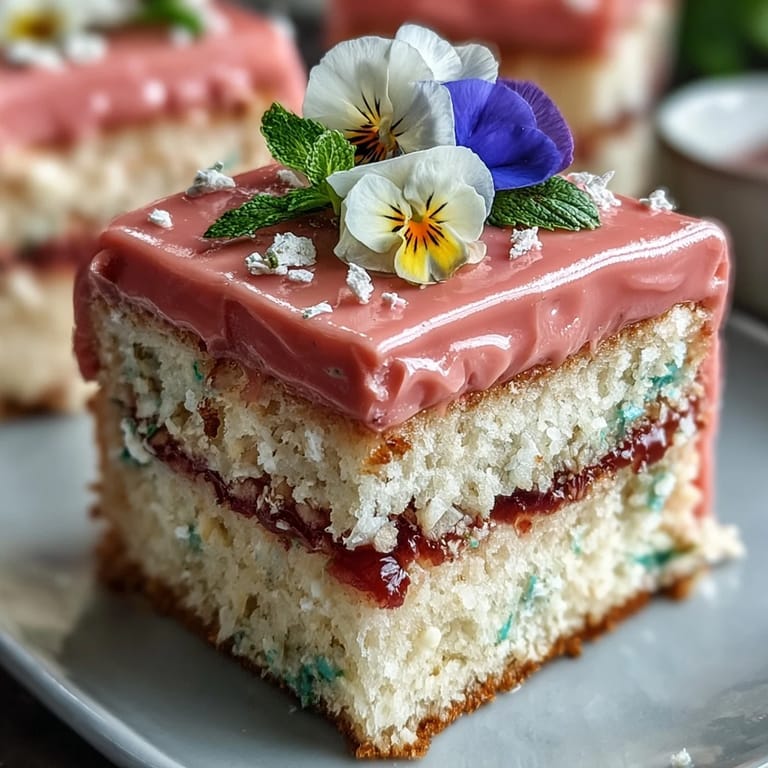
- Edible flowers (1 cup, approximately 30 g): Source these from reputable suppliers where you can confirm they're food-safe and pesticide-free—violas, pansies, and nasturtiums work beautifully.
- Optional food coloring (pastel shades): A tiny drop goes a long way; pastel tints feel spring-like without overwhelming the vanilla and lemon.
Tired of Takeout? 🥡
Get 10 meals you can make faster than delivery arrives. Seriously.
One email. No spam. Unsubscribe anytime.
Instructions
- Prepare your oven and pan:
- Preheat to 350°F and line a 9x13 baking sheet with parchment paper, then lightly grease it—this prevents sticking and makes cleanup effortless. Having everything ready before you start mixing is what separates calm baking from chaos.
- Combine your dry ingredients:
- Whisk flour, baking powder, and salt in a medium bowl until evenly distributed. This mixing ensures the leavening is spread throughout so every bite rises evenly.
- Cream butter and sugar:
- Beat softened butter with sugar for about 3 minutes until the mixture looks pale, fluffy, and noticeably lighter—you're aerating the butter, which creates the structure of your cake. Stop occasionally to scrape down the bowl so nothing gets left behind.
- Incorporate eggs one at a time:
- Add each egg individually, beating well after each addition until fully combined before adding the next. This prevents the mixture from looking broken or curdled, and ensures smooth, even mixing.
- Add vanilla and lemon zest:
- Mix in vanilla extract and fresh lemon zest, beating until the flavors are distributed throughout. You'll notice the mixture brighten slightly as the zest oils release.
- Alternate wet and dry ingredients:
- Add half the flour mixture, then all the milk, then the remaining flour, mixing gently after each addition until just combined—overmixing toughens the cake. Think of it like folding in rather than aggressively beating.
- Spread and bake:
- Pour batter onto the prepared sheet and spread evenly with an offset spatula, then bake 18–22 minutes until a toothpick inserted in the center comes out clean. The kitchen will smell like lemon-vanilla goodness.
- Cool completely:
- Let the cake cool on the baking sheet, then transfer to a wire rack—rushing this step and cutting into warm cake leads to crumbling. Patience here pays off.
- Cut cake circles:
- Using a 2.5–3 inch round cutter, cut out 12 circles from the cooled cake, re-rolling scraps gently if needed. You'll need 2 circles per mini cake, so 12 cuts gives you 6 stacked cakes.
- Make the buttercream:
- Beat softened butter until creamy, then gradually add sifted powdered sugar, vanilla, salt, and 1 tablespoon milk, beating until light and fluffy. Add more milk only if needed to reach spreading consistency—it should hold peaks but still be smooth.
- Tint if desired:
- Add pastel food coloring one tiny drop at a time, mixing thoroughly between additions—a little goes a long way and prevents overly bright frosting. Pastel shades feel spring-appropriate and won't overpower the delicate cake.
- Assemble the mini cakes:
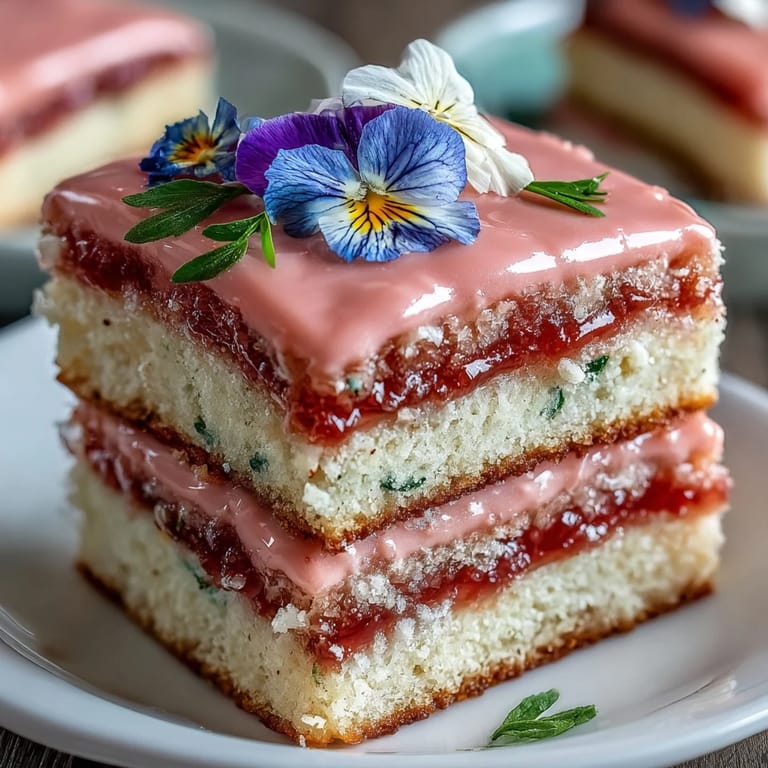
- Place one cake round on a serving plate, spread with buttercream, top with a second round, and add another thin layer of frosting. Repeat to make 6 stacked cakes total.
- Decorate with edible flowers:
- Spread frosting on top of each finished cake and arrange edible flowers artfully—don't overthink it; scattered or clustered both look beautiful. Trust your instincts on placement.
- Chill before serving:
- Refrigerate for 15 minutes so the frosting sets and the flavors meld slightly, giving you better texture and cleaner presentation. This final step makes a noticeable difference.
 Save
Save These cakes showed up at a surprise birthday lunch, and watching my friend's eyes widen when she saw them arranged on a cake stand felt like opening a gift I'd baked myself. In that moment, standing back and seeing something so pretty that I'd made from scratch, I realized these mini cakes had become more than dessert—they were proof that paying attention to small details and taking a little extra care actually matters.
A Word on Edible Flowers
The first time I bought edible flowers, I made the mistake of assuming any flower sold as food-safe actually was, which led to a panicked afternoon of research and apologies to my friend. Now I only order from suppliers who can confirm their flowers are grown without pesticides and specifically for consumption. Violas and pansies have mild flavors that don't compete with the cake, nasturtiums offer a peppery note if you want surprise, and rose petals work if you want classic elegance. Start with one variety and see which feels right for your celebration.
Making These Ahead
You can bake the cake layers up to two days ahead, wrapped tightly at room temperature, or freeze them up to a month—just thaw before frosting. The buttercream keeps in the fridge for three days in an airtight container; simply rebeat it for a few seconds to restore the fluffy texture before using. Assemble the cakes no more than 4 hours before serving so the layers stay tender and the buttercream doesn't dry out, but add the edible flowers just before presenting so they look fresh and vibrant.
Flavor Variations and Personal Touches
Once you master the base recipe, the fun really begins—brush the cake layers with a light citrus syrup (equal parts lemon juice and simple syrup) before frosting for extra moisture and tang, or add a tiny bit of cardamom to the batter for warmth. Tint the buttercream in multiple pastel shades and swirl them together on top for a marbled effect, or pipe rosettes for a more polished look. The cake scraps are too good to waste; crumble them, mix with leftover buttercream, and roll into cake pops for an extra treat.
- Try a hint of lavender in the buttercream by steeping dried lavender in warm milk, then straining it before mixing.
- Brush each cake layer with melted white chocolate for richness, or layer a thin coat of jam between the frosting and cake.
- Experiment with different edible flowers until you find your favorite—each variety brings its own beauty and subtle personality.
 Save
Save These mini cakes proved that celebrating doesn't require elaborate techniques—just care, attention to good ingredients, and a willingness to try something that feels a little fancy. Every time someone bites into one of these, they're tasting spring and thoughtfulness in equal measure.
Recipe FAQs
- → What types of edible flowers work best for decoration?
Violas, pansies, and nasturtiums are popular edible flowers used here, chosen for their vibrant colors and safe consumption. Ensure flowers are pesticide-free and from trusted sources.
- → Can these cakes be made ahead of time?
Yes, the mini cakes can be baked and assembled a few hours before serving. Keep them chilled until ready to enjoy to preserve freshness and texture.
- → What is the best way to achieve a smooth buttercream?
Beat softened butter until creamy before gradually adding sifted powdered sugar, vanilla, and a bit of milk. Mixing thoroughly ensures a light, fluffy texture.
- → How to add extra flavor to the layers?
Brush the cake layers lightly with citrus syrup or lemon glaze before assembling to enhance the lemon notes and add moisture.
- → Are there alternatives for food coloring in the buttercream?
Natural colorings like beet juice, matcha powder, or turmeric can be used to tint buttercream, offering subtle hues without artificial additives.