 Save
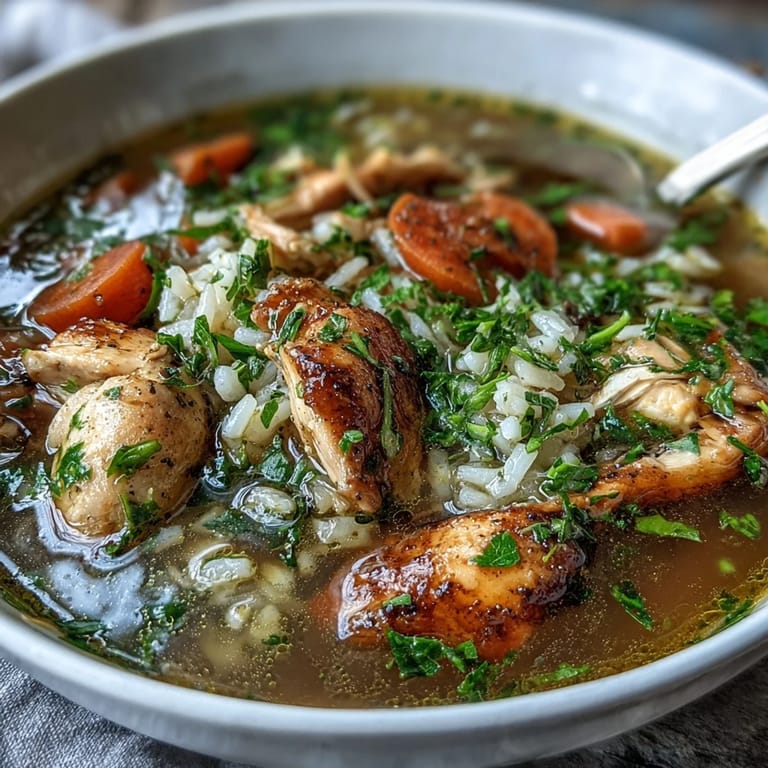
Save There's something about a soup that requires just one pot and your undivided attention for less than an hour that feels like a small victory in the kitchen. My neighbor mentioned she'd been craving chicken and rice soup but dreaded the cleanup, so I threw together whatever was in my pantry one Tuesday evening and realized how perfectly simple it could be. The aroma that filled her kitchen while we chatted at the stove was enough to make her forget she'd had a rough day at work. That's when I knew this recipe belonged in my regular rotation, not just for how it tastes, but for what it represents: nourishment without the stress.
I made this for my partner when he came home sick, and watching him have a proper appetite again after a few spoonfuls reminded me why comfort food exists. There's no pretense here, just honest cooking that feels personal the moment it hits the bowl. The steam rising from the ladle, the sound of the spoon clinking against the ceramic—these small moments matter more than any fancy technique ever could.
Ingredients
- Boneless, skinless chicken breasts (2, about 400 g, cut into bite-sized pieces): Cutting them into smaller pieces means they cook faster and distribute throughout the pot rather than sitting in one heavy chunk.
- Medium onion (1, finely chopped): This is your flavor foundation—don't skip the mincing step because larger chunks won't soften enough to meld into the broth.
- Carrots (2, peeled and sliced): They add natural sweetness and a subtle earthiness that balances the savory broth beautifully.
- Celery stalks (2, sliced): Often overlooked, but celery brings a gentle herbal note that makes the entire soup taste more complete.
- Garlic cloves (3, minced): The moment you add garlic is when your kitchen starts smelling like real food—this is non-negotiable.
- Long-grain white rice (2/3 cup or 120 g, rinsed): Rinsing removes excess starch so your soup won't turn gluey; this step takes thirty seconds but changes everything.
- Low-sodium chicken broth (6 cups or 1.5 liters): Quality broth matters because it's essentially the soul of the dish—taste a few brands if you have time.
- Olive oil or unsalted butter (1 tablespoon): Olive oil keeps it dairy-free; butter adds a subtle richness if you're not restricted.
- Dried thyme (1 teaspoon): This herb whispers rather than shouts, creating depth without overwhelming the delicate chicken flavor.
- Bay leaf (1): Always remove this before serving—I learned that lesson the hard way by biting into one at a dinner party.
- Black pepper (1/2 teaspoon): Fresh cracked pepper tastes noticeably better than pre-ground if you have a mill handy.
- Salt (3/4 teaspoon, or to taste): Start with three-quarters and adjust at the end because the broth already contains sodium.
- Fresh parsley (2 tablespoons, chopped): Add this at the very end so it stays bright green and doesn't lose its fresh flavor to the heat.
- Lemon wedges (optional, for serving): A squeeze of lemon right before eating brightens everything and makes the soup taste more alive.
Tired of Takeout? 🥡
Get 10 meals you can make faster than delivery arrives. Seriously.
One email. No spam. Unsubscribe anytime.
Instructions
- Warm your base:
- Heat the oil or butter in a large pot over medium heat until it shimmers just slightly. This is your signal that it's hot enough to cook the vegetables properly without burning them.
- Build the flavor foundation:
- Add the chopped onion, carrots, and celery, stirring occasionally for about 5 minutes until the edges of the vegetables soften and the onion becomes translucent. You'll notice the pot starts to smell absolutely amazing at this point.
- Wake up the garlic:
- Stir in the minced garlic and cook for just 1 minute—any longer and it can turn bitter. The kitchen will suddenly smell like a restaurant.
- Brown the chicken briefly:
- Add the bite-sized chicken pieces and cook for 2 to 3 minutes, stirring often, until they lose their raw pink color on the outside. They don't need to be fully cooked because they'll finish in the broth.
- Combine everything:
- Pour in the rinsed rice, chicken broth, thyme, bay leaf, salt, and pepper, stirring gently to distribute the rice evenly throughout the pot. Watch how quickly the broth becomes fragrant as soon as the seasonings hit the liquid.
- The simmer that matters:
- Bring the mixture to a boil over medium-high heat, then reduce to a gentle simmer, cover, and let it cook undisturbed for 20 to 25 minutes. The rice will gradually absorb the broth while the chicken finishes cooking through, and the whole pot becomes a unified, comforting dish.
- Final touches:
- Remove the bay leaf (seriously, don't forget this), taste the soup, and adjust the salt and pepper to your preference. Stir in the fresh parsley right before ladling into bowls so it stays vibrant and flavorful.
- Serve with intention:
- Ladle into bowls and offer lemon wedges on the side for anyone who wants that final brightness. A simple meal served warm deserves a moment of attention.
 Save
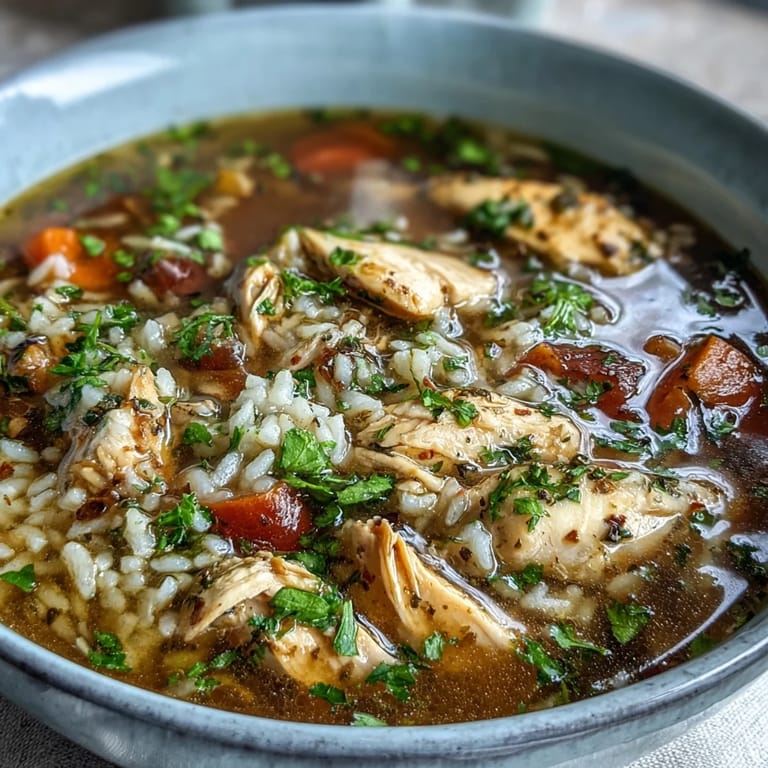
Save My daughter asked for this soup three nights in a row last month, which is how I knew it had crossed from recipe into something she actually wanted in her life. That feeling—when someone asks for the same thing again—is when cooking stops being about following instructions and becomes about showing up for the people you feed.
Why This Works as an Everyday Meal
Chicken and rice soup succeeds because it meets you wherever you are in your cooking confidence. You don't need special techniques or hard-to-find ingredients; you need about fifteen minutes of prep and the willingness to let a pot simmer while you do something else. The repetitive stirring, the gradual softening of vegetables, the way the broth slowly turns golden—these aren't tasks, they're rhythms that calm your mind while your hands stay busy. Most importantly, this soup tastes like someone cared enough to make something nourishing.
The Power of Rinsing Your Rice
I used to skip this step because it seemed unnecessary, and my early batches turned into something closer to rice porridge than soup. Rinsing removes the excess starch coating each grain, which means your finished soup stays light and brothy rather than becoming thick and gluey. It takes maybe thirty seconds under cold running water while you swirl the rice in a fine-mesh strainer, and those thirty seconds genuinely transform the final result. Once I started rinsing, I understood why restaurants all seem to have better rice texture than home cooks—they're not keeping secrets, just doing this one small thing correctly.
Customizing Without Losing the Soul
The skeleton of this recipe is strong enough to welcome additions without falling apart. Some nights I stir in a handful of fresh spinach in the last five minutes, other times I'll add a Parmesan rind during the simmer and fish it out before serving for an umami depth that guests always notice. Brown rice works beautifully if you have time for an extra fifteen to twenty minutes of cooking, and I've even substituted half the chicken with leftover turkey with excellent results. The bay leaf, thyme, and broth are the non-negotiables—everything else can dance around them based on what your pantry holds or what your mood demands.
- A squeeze of fresh lemon juice brightens the entire bowl right before eating and feels like a small luxury in something so simple.
- If you have extra broth after serving, freeze it in an ice cube tray to add back later when reheating so the soup never becomes too thick.
- Crusty bread on the side transforms this from lunch into a meal that feels complete and intentional.
 Save
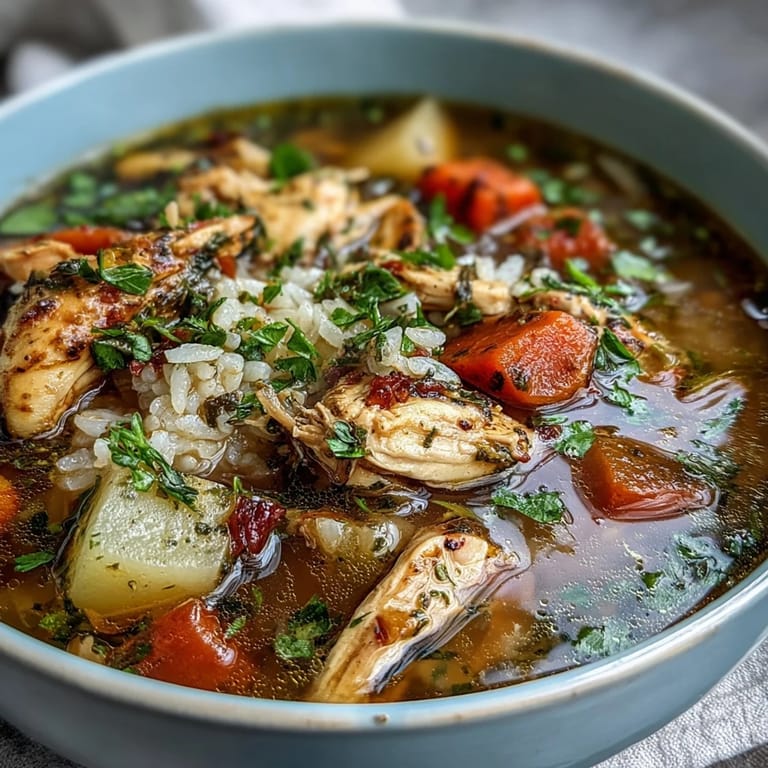
Save This is the kind of recipe that becomes more valuable the more you make it, not because it gets harder or requires some secret knowledge, but because you'll develop a feel for it. You'll know by smell when the vegetables are ready, you'll understand your stovetop's simmer temperature, you'll taste and adjust without thinking. That's when a recipe becomes truly yours.
Recipe FAQs
- → Can I use brown rice instead of white?
Yes, brown rice can be substituted but will require 15-20 minutes extra simmering time to become tender.
- → How can I add more vegetables to the dish?
Spinach or kale can be stirred in during the last 5 minutes of cooking to add extra greens and nutrition.
- → Is it possible to make this dairy-free?
Using olive oil instead of butter keeps the dish dairy-free while maintaining a rich flavor.
- → What is the best way to store leftovers?
Store in an airtight container in the fridge and add extra broth when reheating as the rice absorbs liquid over time.
- → Can I add more herbs for flavor?
Absolutely, thyme and bay leaf provide a savory base, but fresh parsley at the end can be complemented with other fresh herbs like thyme or rosemary.