 Save
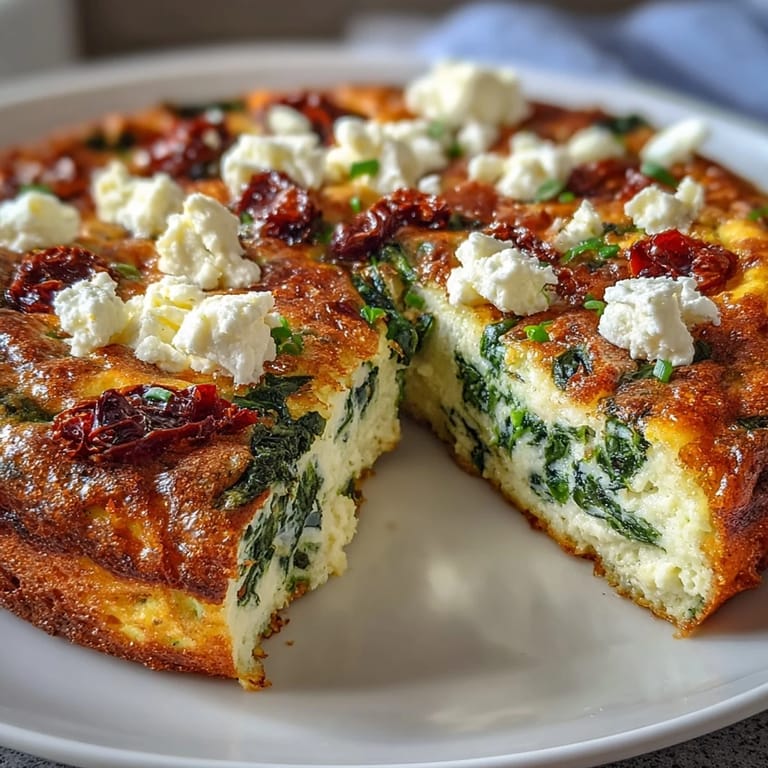
Save My neighbor knocked on my kitchen door one Saturday morning with a container of sun-dried tomatoes from her garden project, and honestly, I had no idea what to do with them. She mentioned frittata, which felt both fancy and impossibly simple at the same time. That afternoon, I assembled eggs, spinach, and feta with those jewel-like tomatoes, and the whole thing came together in under forty minutes. It became my go-to when friends show up hungry or when I need something that feels restaurant-quality but requires minimal fuss.
I made this for my sister's book club meeting, and three people asked for the recipe before they'd even finished eating. What surprised me most was how the sun-dried tomatoes created these little bursts of concentrated flavor that made every bite interesting, while the feta stayed creamy and soft. It's the kind of dish that makes people think you spent hours in the kitchen when you really just combined good ingredients and let the oven do the work.
Ingredients
- Fresh baby spinach: Use tender baby spinach rather than mature leaves—it wilts quickly and won't leave you with stringy bits in your frittata.
- Sun-dried tomatoes packed in oil: These bring concentrated sweetness and tang that fresh tomatoes can't match; drain them well so you don't oversaturate the eggs.
- Yellow onion: The mild sweetness mellows as it cooks, creating a gentle flavor base that doesn't overpower the delicate eggs.
- Garlic: One clove is enough—too much turns bitter in the oven, but a single clove adds warmth without loudness.
- Large eggs: Six eggs create that custardy, just-set texture that makes frittatas so satisfying; don't skimp on size.
- Whole milk: This keeps the eggs tender and adds a subtle richness that makes every bite feel luxurious.
- Feta cheese: Crumbled feta softens into creamy pockets throughout the frittata, delivering salty, tangy moments of flavor.
- Parmesan cheese: A quarter cup adds umami depth and helps the top turn golden brown in the oven.
- Dried oregano: Mediterranean herbs tie all the flavors together without needing fresh herbs you might not have on hand.
- Olive oil: Good quality matters here since you taste it directly; it's your fat for cooking and flavor.
Tired of Takeout? 🥡
Get 10 meals you can make faster than delivery arrives. Seriously.
One email. No spam. Unsubscribe anytime.
Instructions
- Heat your oven and skillet:
- Set the oven to 375°F and let it preheat while you prep everything—this ensures the frittata bakes evenly without the edges overcooking.
- Build your flavor base:
- Heat olive oil in your ovenproof skillet over medium heat, then sauté the chopped onion until it's soft and translucent, about 3 to 4 minutes. Add the minced garlic and let it perfume the oil for just 1 minute more, listening for that subtle sizzle that tells you it's releasing its flavor.
- Wilt the greens and add brightness:
- Stir in the chopped spinach and watch it transform from bright green to dark and tender in about 2 minutes. Toss in the drained sun-dried tomatoes and let them warm through for another minute, which softens their edges slightly.
- Prepare your egg custard:
- In a separate bowl, whisk together the eggs and milk until well combined, then season with oregano, salt, and pepper. Gently fold in the crumbled feta and grated Parmesan so the cheese is distributed throughout rather than clumping together.
- Combine everything:
- Pour the egg mixture evenly over the vegetables in the skillet and stir once gently to distribute everything without overworking the eggs. Let it cook on the stovetop for 2 to 3 minutes until you notice the edges starting to set while the center still jiggles slightly.
- Finish in the oven:
- Transfer the skillet to the preheated oven and bake for 10 to 12 minutes until the center is just set and the top has turned a light golden color. The frittata should have a slight wobble in the very center when you shake the pan gently—this is perfect, not overdone.
- Rest and serve:
- Remove the skillet from the oven and let it cool for a few minutes so it sets fully and becomes easier to slice. Serve it warm, at room temperature, or even cold the next day straight from the fridge.
 Save
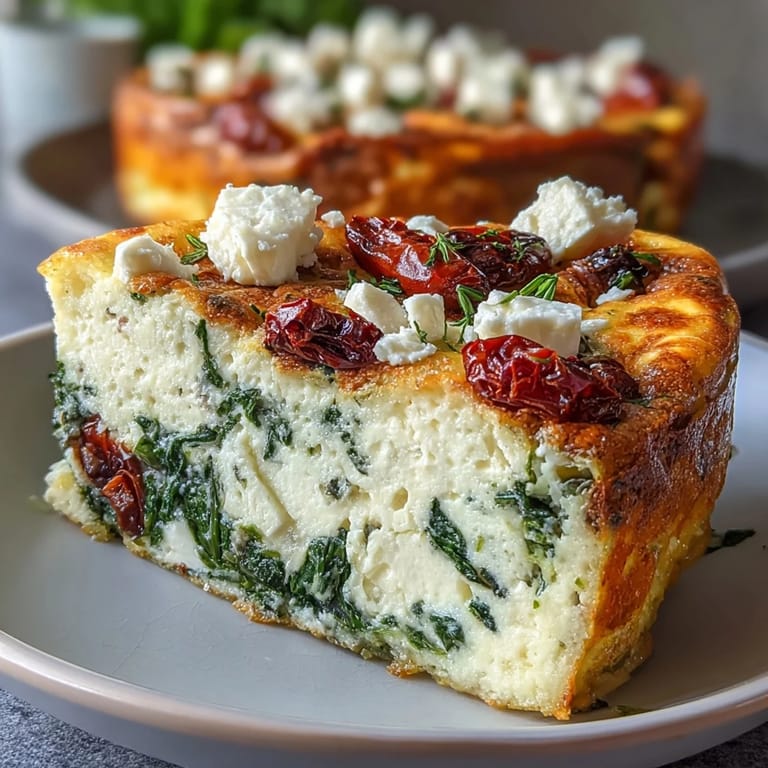
Save There's something deeply satisfying about pulling a golden frittata from the oven, knowing that in thirty-five minutes you've created something that tastes like you actually have your life together. My dad called it "egg pie" the first time he tried it, and now that's what we all call it, and somehow it makes the whole thing feel more like comfort food than technique.
Why This Works as Brunch or Dinner
A frittata occupies this beautiful middle ground where it's too substantial to feel like breakfast but too light to weigh you down at dinner. I've served slices with a simple salad and crusty bread at 6 p.m., and I've also cut it into wedges and served it at room temperature at noon. The Mediterranean flavors make it feel special without requiring any cooking skills beyond the ability to whisk eggs and monitor a stovetop for a few minutes.
Substitutions and Flexibility
One Tuesday evening, I realized I'd forgotten to buy fresh spinach but had a bag of frozen in my freezer, so I thawed it, squeezed out every drop of water, and threw it in anyway. It worked beautifully because frozen spinach is already wilted, so it releases less moisture into your eggs than fresh would. This frittata also welcomes whatever vegetables you have lingering in your crisper drawer—roasted red peppers, mushrooms, zucchini—as long as you don't add too much or you'll end up with a soggy result.
The Secret to a Golden Top
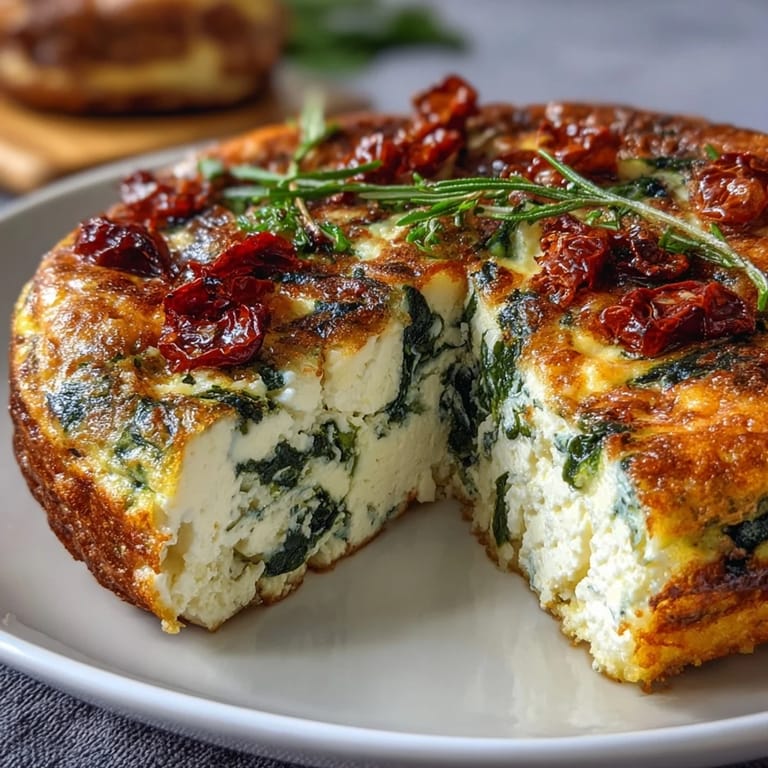
The difference between a pale, boring frittata and one with a beautiful golden crust comes down to using both feta and Parmesan together. The Parmesan browns faster and adds visual appeal while the feta contributes that salty, creamy element. Some people finish frittatas under the broiler for the last minute to add extra browning, but I find that risky because it can turn from golden to burnt faster than you can blink.
- Check the frittata at 10 minutes—every oven runs differently, so don't rely entirely on timing.
- A slight jiggle in the very center when you shake the pan is your sign that it's done; carryover cooking will finish setting it.
- Let it cool for at least 2 minutes before slicing so it holds together rather than falling apart on the plate.
 Save
Save This frittata has quietly become one of my most reliable recipes, the kind I make when I want to feel accomplished without actually stressing. Serve it warm with a crisp Sauvignon Blanc and watch people's faces light up.
Recipe FAQs
- → Can I use frozen spinach instead of fresh?
Yes, thawed and well-drained frozen spinach can be substituted without compromising texture or flavor.
- → What cheese works well in this dish?
Crumbled feta and grated Parmesan add tang and depth, but plant-based alternatives can be used for dairy-free options.
- → How do I ensure the frittata cooks evenly?
Sauté vegetables first, pour in the egg mixture, cook briefly on the stove, then transfer to a preheated oven to finish baking.
- → Is it suitable for gluten-free diets?
Yes, the ingredients are naturally gluten-free, but verify packaged items like sun-dried tomatoes and cheeses.
- → What’s the best way to serve this dish?
Serve warm or at room temperature alongside a crisp salad or crusty bread and a glass of white wine.