 Save
Save My sister arrived at my kitchen door with a box of perfectly ripe strawberries from the farmer's market, and somehow that simple visit turned into an afternoon of whipping egg whites into clouds. She'd mentioned offhand that pavlova seemed intimidating, so naturally I decided we'd make one together. What started as a casual Saturday ended with us standing in front of the oven, watching the meringue transform from wet peaks into something that looked almost too delicate to be real. The house smelled like vanilla and caramelized sugar, and when we finally pulled it out and let it cool, I understood why this dessert has captivated people for generations.
I once made this for a dinner party where I was convinced the whole thing would collapse the moment I transferred it to the plate, so I recruited my most careful friend to help. We moved it like we were defusing something fragile, and when it arrived at the table completely intact, everyone laughed at how seriously we'd treated it. That's when I realized pavlova is actually more forgiving than its reputation suggests—it just needs respect and a steady hand.
Ingredients
- Egg whites (4 large, room temperature): Room temperature whites whip into volume faster and fuller than cold ones, which I learned by making this twice and wondering why the first batch seemed stubborn.
- Superfine sugar (1 cup): The fine crystals dissolve seamlessly into the meringue, creating that silky, glossy texture that tells you everything is working right.
- Cornstarch (1 tsp): This keeps the center chewy while the outside stays crisp, and honestly, it's the secret ingredient nobody talks about enough.
- White vinegar (1 tsp): It stabilizes the meringue and adds a subtle brightness that balances the sweetness without being noticeable.
- Vanilla extract (1 tsp for meringue, 1 tsp for cream): Use real vanilla if you can—it makes a difference in how the flavors settle into your mouth.
- Heavy cream (1 cup, chilled): Cold cream whips faster and holds its shape better, so don't skip the chilling step even if you're in a hurry.
- Powdered sugar (2 tbsp): It dissolves instantly into the cream without any grittiness that granulated sugar might leave behind.
- Fresh strawberries (2 cups, hulled and sliced): Choose berries that smell sweet and give slightly when pressed—they'll macerate beautifully and release just enough juice to brighten the whole dessert.
- Granulated sugar for macerating (1 tbsp, optional): This draws out the strawberry juices and concentrates their flavor, though you can skip it if your berries are already bursting with sweetness.
- Fresh mint leaves (optional): A small handful adds color and a whisper of cool flavor that makes the whole thing feel intentional.
Tired of Takeout? 🥡
Get 10 meals you can make faster than delivery arrives. Seriously.
One email. No spam. Unsubscribe anytime.
Instructions
- Set up your space:
- Preheat the oven to 275°F and line a baking sheet with parchment paper, then draw a 9-inch circle as your guide. Having everything ready before you start beating the egg whites means you won't waste time once they're whipped.
- Whip the egg whites:
- In a bowl that's genuinely clean and dry—wipe it with a paper towel if you're uncertain—beat the egg whites on medium speed until soft peaks form, which takes about 3 to 4 minutes. You'll see the mixture transform from frothy to cloud-like, and that's your signal to move forward.
- Add the sugar gradually:
- With the mixer still running, add the superfine sugar one tablespoon at a time, which feels slower than you'd like but creates a much more stable meringue. Keep beating until the peaks are stiff and glossy, usually another 7 to 10 minutes total—you're looking for mixture that stands straight up when you lift the beater.
- Fold in the stabilizers:
- Sprinkle the cornstarch, vinegar, and vanilla over the top, then use a spatula to fold everything together gently but thoroughly, being careful not to deflate those peaks you just created. The mixture should still look fluffy and voluminous when you're done.
- Shape the base:
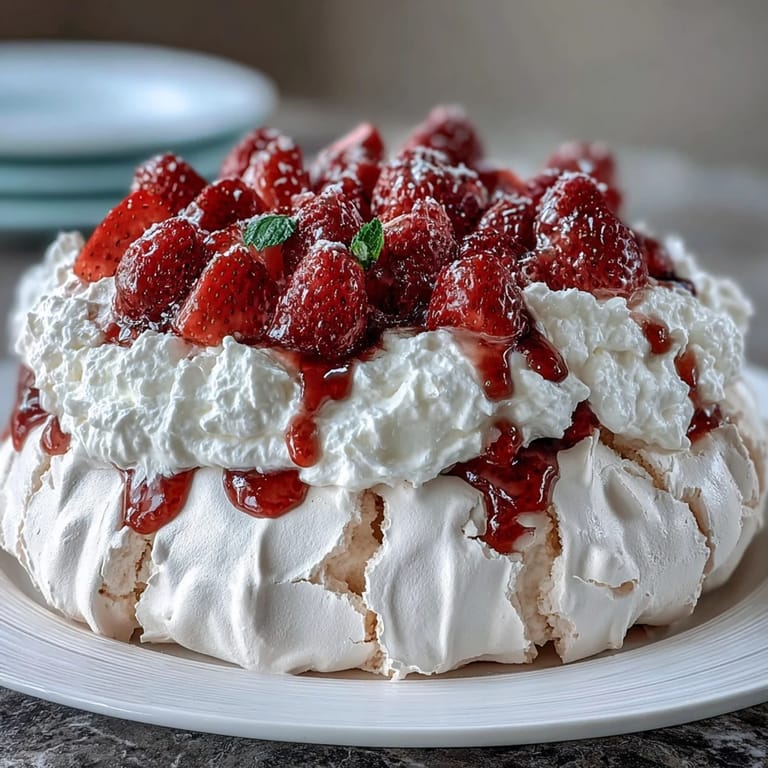
- Spoon the meringue onto your parchment circle, using the guide to keep it roughly nine inches across, then use the spatula to create a shallow nest shape with slightly raised edges. This creates little pockets for the cream and berries to nestle into.
- Low and slow baking:
- Bake for 1 hour 15 minutes at 275°F—the meringue should be pale and set but not brown. When it's done, turn off the oven and crack the door open slightly, then let it cool completely inside, which prevents sudden temperature changes that could crack it.
- Whip the cream:
- While the meringue bakes, chill your mixing bowl, then whip the heavy cream with powdered sugar and vanilla until soft peaks form—you want it to hold its shape but still feel light. Don't overbeat or you'll end up with something closer to butter.
- Macerate the berries:
- Toss the sliced strawberries with granulated sugar if you're using it, then let them sit for about 10 minutes so they release their juices. This step transforms the berries into something more concentrated and delicious.
- Bring it together:
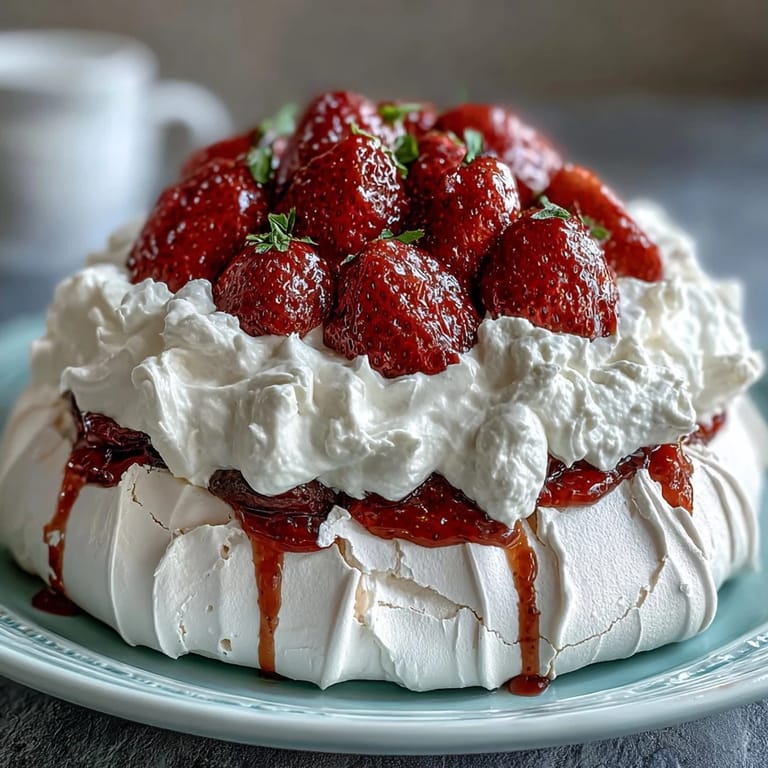
- Once the meringue is completely cool, carefully transfer it to your serving plate—some people slide a spatula underneath while others use two wide spatulas like they're carrying something precious. Spread the whipped cream across the center in an even layer.
- Final assembly and serving:
- Top the cream with the macerated strawberries and scatter a few mint leaves over everything if you have them, then serve immediately while the meringue is still crisp on the outside. The magic happens when all three elements—crispy, creamy, and fresh—hit your mouth at the same time.
 Save
Save There's a moment when someone takes their first bite of pavlova and their eyes actually go soft—they pause because the textures are doing something unexpected, something delightful. I watched my mom experience that once, and she put her fork down and just sat with it for a second, and that's when I realized pavlova is one of those foods that reminds people why we bother cooking at all.
The Science of Perfect Meringue
Meringue works because egg whites are basically protein and water, and when you whip them, you're creating millions of tiny air bubbles that get trapped in a delicate foam. The sugar dissolves into those pockets and stabilizes everything, while the cornstarch and vinegar add insurance against weeping or collapsing. Understanding this helped me stop being nervous about the process—once I realized it's chemistry, not magic, I made better pavlovas every time.
Why Fresh Fruit Matters More Than You Think
The strawberries aren't just decoration—they're the entire flavor story, especially since the meringue itself is mostly sweetness and air. I once used strawberries that looked perfect but tasted like water, and the whole dessert felt flat and sad. Since then, I've learned to actually taste one berry from whatever batch I'm buying, and I look for ones that smell sweet and intense before I commit.
Make-Ahead Thoughts and Storage
You can bake the meringue base up to two days ahead and store it in an airtight container away from moisture, which actually takes some of the stress out of entertaining. The whipped cream should be made fresh on the day of serving, and the strawberries can be sliced and sugared a couple hours early if you keep them covered in the fridge. Assembly should always happen within an hour of serving so everything stays crisp and perfect.
- If you're making this for a crowd, you can actually set up a little station where people add their own cream and berries—it looks beautiful and tastes even better because everyone gets exactly what they want.
- On humid days, the meringue might soften faster, so plan accordingly and maybe assemble it just 30 minutes before people eat instead of an hour.
- If someone at your table is gluten-free or vegetarian, this dessert is naturally both, which makes it quietly perfect for mixed groups.
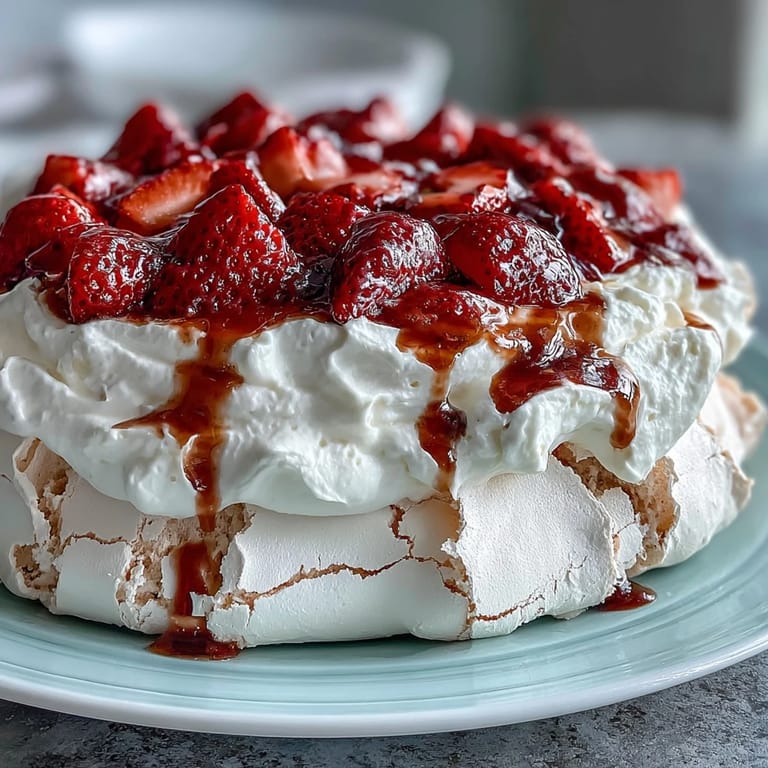 Save
Save Pavlova is one of those desserts that feels fancier than it actually is, which is exactly why I keep coming back to it. It's proof that you don't need complicated techniques or rare ingredients to make something that feels special and tastes even better.
Recipe FAQs
- → How do you achieve stiff peaks for the meringue?
Beat the egg whites at medium speed until soft peaks form, then gradually add superfine sugar while increasing speed. Continue until glossy, stiff peaks appear, ensuring no fat in the bowl to prevent failure.
- → Why let the meringue cool in the oven?
Cooling the meringue inside the oven with the door slightly ajar helps it dry out slowly, maintaining its crisp exterior and chewy interior without cracking.
- → Can other berries be used instead of strawberries?
Yes, a mix of berries like raspberries or blueberries can replace strawberries, offering varying sweet-tart flavor and color.
- → What is the purpose of cornstarch and vinegar in the meringue?
Cornstarch stabilizes the meringue’s texture, while vinegar adds acidity that helps maintain structure and prevents weeping.
- → How is the whipped cream prepared?
Chilled heavy cream is whipped with powdered sugar and vanilla extract until soft peaks form, providing a light, billowy texture to complement the meringue.