 Save
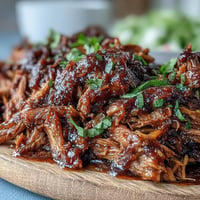
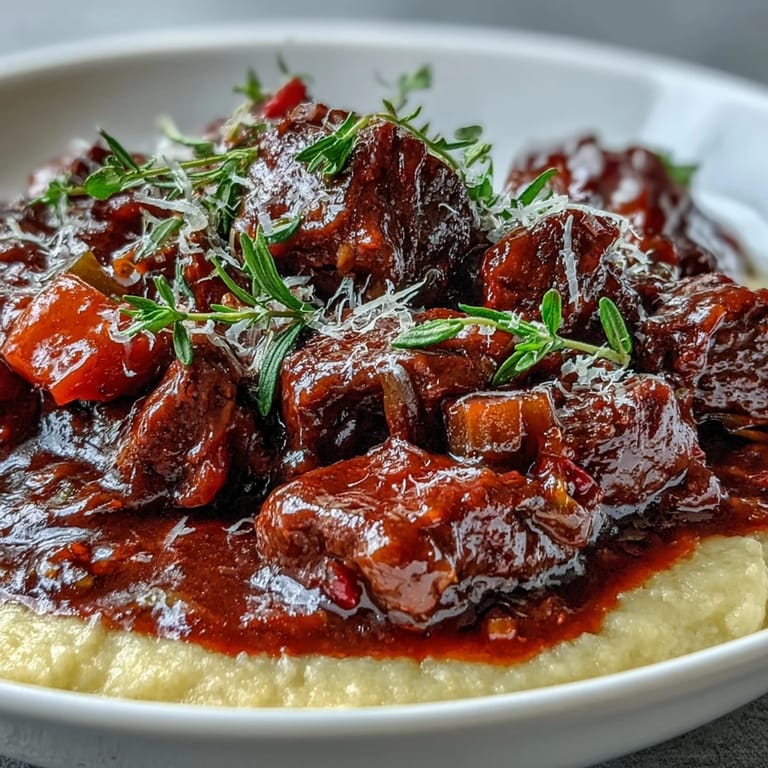
Save The first time I opened a bottle of sloe gin in my kitchen, I wasn't even sure what to do with it. A friend had brought it back from a countryside trip, and it sat on my shelf for weeks until one cold evening when I had venison in the fridge and no clear plan. I poured a little into the pot on a whim, and the smell that rose up, sweet and wild and faintly bitter, made me lean in closer. That stew became something I craved every winter after. The venison turned so tender it fell apart on the spoon, and the polenta underneath soaked up every bit of that rich, berry-laced gravy.
I made this for a small dinner party once, and everyone went quiet after the first bite. It wasn't awkward silence, it was the kind where people are too busy tasting to talk. One guest asked if I'd trained in a restaurant, which made me laugh because I'd only started cooking venison that year. The truth is, this dish does the work for you if you give it time. The slow simmer pulls everything together, and the polenta is forgiving even if you're still learning to whisk without lumps.
Ingredients
- Venison shoulder or stewing venison: This cut becomes meltingly tender with slow cooking, and its deep flavor stands up beautifully to the sloe gin and stock.
- Olive oil: Use a good quality oil for browning, it helps build that essential caramelized base in the pan.
- Onion, carrots, and celery: The holy trinity of stew vegetables, they add sweetness and body to the sauce as they break down.
- Garlic and tomato paste: These deepen the savory backbone, and toasting the paste for a minute makes all the difference.
- Sloe gin: The star ingredient, it brings a tart, fruity complexity that you can't replicate with anything else, though port works in a pinch.
- Beef or game stock: A rich stock is crucial, homemade is ideal but a good quality store-bought one works if it's gluten-free when needed.
- Redcurrant jelly: This adds a touch of sweetness and a glossy finish to the sauce, balancing the tartness of the sloe gin.
- Bay leaves, thyme, and juniper berries: These aromatics give the stew a wintery, almost forest-like fragrance that fills the whole kitchen.
- Polenta: Quick-cooking polenta is convenient, but traditional polenta has a heartier texture if you have the patience to stir.
- Butter and Parmesan: These transform plain polenta into something creamy and luxurious, don't skimp on either.
Tired of Takeout? 🥡
Get 10 meals you can make faster than delivery arrives. Seriously.
One email. No spam. Unsubscribe anytime.
Instructions
- Brown the venison:
- Heat the olive oil in a heavy casserole over medium-high heat and brown the venison cubes in batches, making sure not to crowd the pan. You want a deep, golden crust on each piece, which builds flavor into the entire stew.
- Soften the vegetables:
- Add the onion, carrots, and celery to the same pan and cook for 5 to 7 minutes until they start to soften and release their sweetness. Stir in the garlic and tomato paste, letting them cook for another minute until fragrant.
- Deglaze with sloe gin:
- Return the venison to the pan and pour in the sloe gin, letting it bubble and reduce for about 2 minutes. The alcohol will cook off, leaving behind all that fruity depth.
- Add the liquids and aromatics:
- Pour in the stock and stir in the redcurrant jelly, bay leaves, thyme, and juniper berries. Season with salt and pepper, then bring everything to a gentle simmer.
- Slow simmer the stew:
- Cover the casserole and reduce the heat to low, letting the stew cook gently for 2 hours, stirring occasionally. The venison should become fork-tender and the sauce will thicken beautifully.
- Prepare the polenta:
- While the stew simmers, heat the milk and water in a saucepan until just simmering, then gradually whisk in the polenta. Stir constantly over low heat for 5 to 10 minutes until thick and creamy.
- Finish the polenta:
- Stir in the butter and Parmesan, then season with salt to taste. The polenta should be smooth and rich, perfect for soaking up the stew.
- Serve:
- Remove the bay leaves and thyme sprigs from the stew, then ladle it generously over the creamy polenta. Garnish with fresh parsley or thyme if you like.
 Save
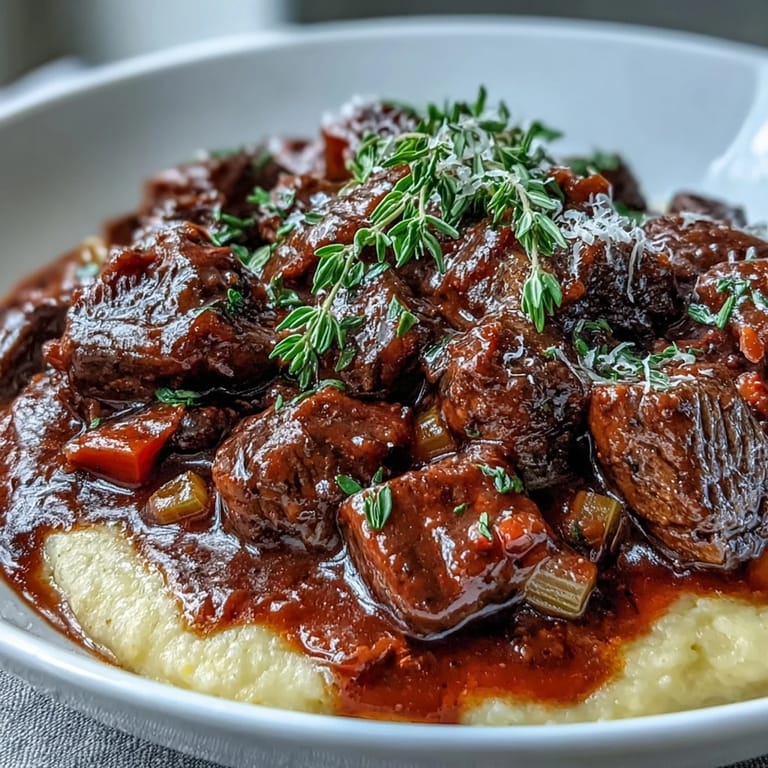
Save There was an evening when I served this to my parents, and my dad, who usually prefers plain roasts, asked for seconds. He said the polenta reminded him of something his grandmother used to make, though hers was much simpler. That moment, watching him scrape his bowl clean, made me realize how food can quietly connect generations, even when the recipes aren't quite the same.
Choosing Your Venison
Venison shoulder is ideal for stewing because it has enough fat and connective tissue to stay moist during long cooking. If you can only find lean cuts like loin, save those for quick searing and use stewing venison or diced leg instead. I learned this after turning a beautiful piece of loin into something dry and chewy, a mistake I won't repeat. Ask your butcher for cuts labeled for braising or stewing, and don't be shy about requesting they cube it for you.
The Magic of Sloe Gin
Sloe gin isn't just sweetened gin, it's made by steeping sloe berries in the spirit, and it has a tart, fruity complexity that brings something special to this stew. If you can't find it, a good port or a berry liqueur like cassis can work, though the flavor will shift slightly. I've also added a splash of red wine alongside the sloe gin for extra depth, and it's a wonderful variation. The key is to let it reduce properly so the alcohol cooks off and the flavors concentrate.
Making Polenta Without Lumps
The secret to smooth polenta is adding it gradually while whisking constantly, and keeping the heat low enough that it doesn't seize up. I used to dump it all in at once and end up with clumps I'd spend ten minutes trying to break up. Now I pour it in a slow, steady stream with one hand while whisking with the other, and it works every time. If you do get lumps, don't panic, just keep stirring and they'll usually dissolve as the polenta cooks.
- Use a heavy-bottomed saucepan to prevent scorching on the bottom.
- Stir frequently even after it thickens, polenta can stick and burn quickly.
- Taste it before serving, it should be creamy and tender, not gritty or raw tasting.
 Save
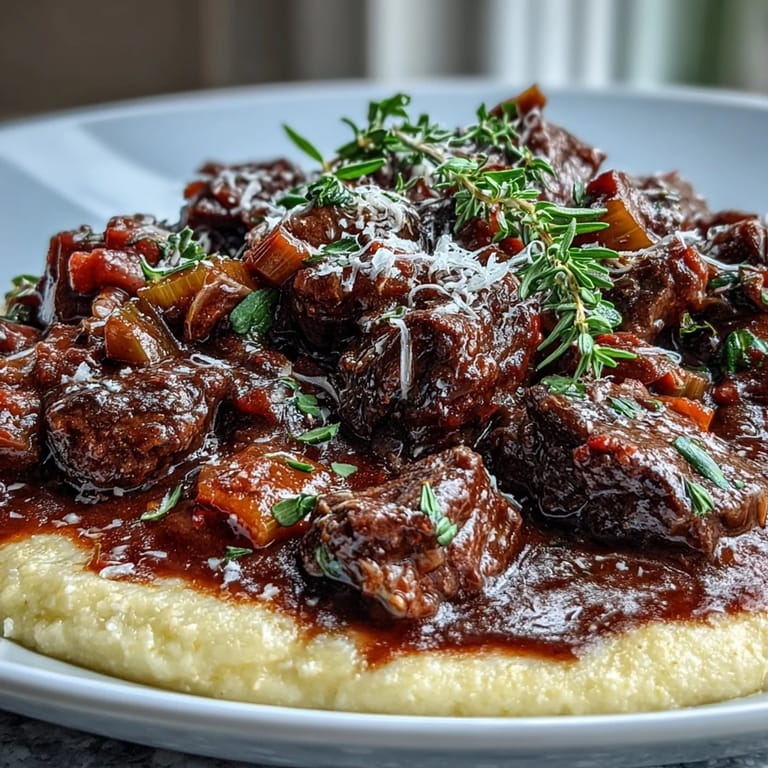
Save This is the kind of dish that makes winter feel less bleak, something slow and fragrant that fills the house with warmth. I hope it becomes a favorite in your kitchen, too.
Recipe FAQs
- → Can I use a different cut of venison?
Yes, venison shoulder or any stewing cuts work best as they become tender during the long braising process. Avoid lean cuts like loin as they may dry out.
- → What can I substitute for sloe gin?
Port, blackberry liqueur, or a good-quality red wine mixed with a touch of cassis make excellent alternatives that provide similar depth and fruity notes.
- → Can I make this ahead of time?
Absolutely. The stew actually improves when made a day ahead, allowing flavors to deepen. Reheat gently and prepare fresh polenta just before serving.
- → How do I know when the venison is tender enough?
The meat should fall apart easily when pressed with a fork and offer no resistance. If still firm after 2 hours, continue cooking in 30-minute intervals.
- → Can I use instant polenta?
Yes, quick-cooking polenta works perfectly and saves time. Follow package instructions but maintain the butter and Parmesan additions for best flavor and creaminess.
- → What wine pairs best with this dish?
Full-bodied red wines like Shiraz, Cabernet Sauvignon, or a robust Côtes du Rhône complement the rich venison and sloe gin beautifully.