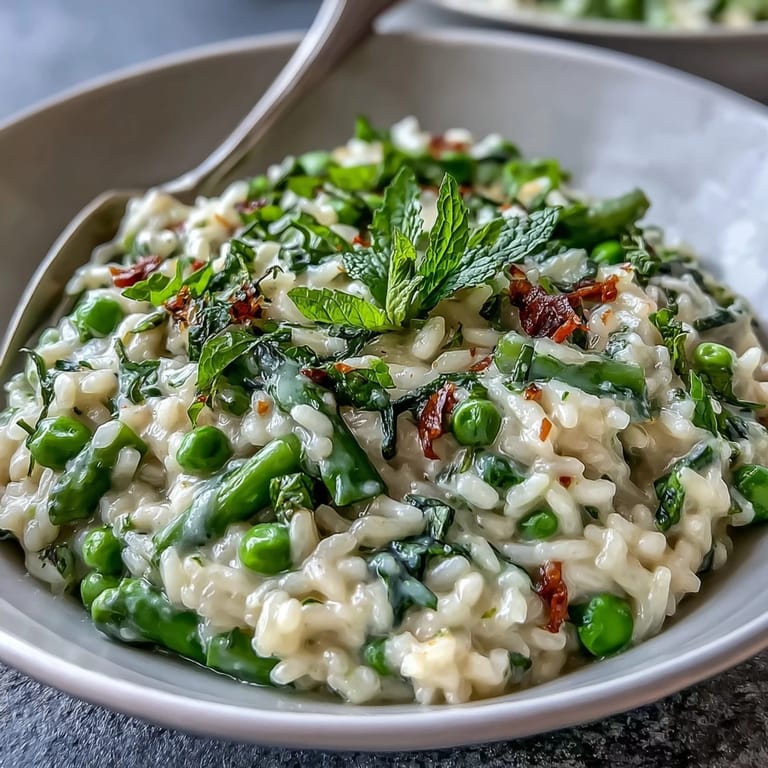
 Save
Save My neighbor knocked on my kitchen window one April afternoon, arms full of fresh mint from her garden, asking if I wanted some before it got too wild. I had a box of Arborio rice and a plan forming already, so naturally I said yes. That evening, stirring creamy risotto infused with her mint and handfuls of spring peas, I realized this dish had become my answer to every dinner party invitation I'd been dreading. The kind of food that makes people slow down mid-conversation to say how bright and alive it tastes.
Last spring I made this for four friends who all showed up stressed about work, and by the time we finished the first bites, the whole energy shifted. Someone asked for the recipe, then another person did, and suddenly we weren't just eating dinner—we were having one of those meals that gets mentioned weeks later. That's when I knew this risotto was something special, the kind of dish that does more than fill your plate.
Ingredients
- Fresh or frozen green peas (1 cup): If you can find fresh ones in spring, use them—they're sweeter and brighter than frozen, though frozen works beautifully and honestly saves you stress on cooking day.
- Small onion, finely chopped: The finer you chop, the more evenly it melts into the butter and disappears, building a subtle sweetness as the base.
- Garlic, minced (2 cloves): Fresh garlic only here; jarred loses something essential when stirred into warm stock.
- Arborio rice (1 1/2 cups): Those short, starchy grains are what make risotto creamy without cream—don't reach for long-grain rice, it won't have the same soul.
- Vegetable stock, kept warm (4 cups): Warm stock means the rice cooks evenly and doesn't shock the grains; cold stock will slow everything down and confuse the texture.
- Dry white wine (1/2 cup): Sauvignon Blanc or something you'd actually drink adds acidity and elegance that transforms the dish entirely.
- Unsalted butter, divided (3 tbsp): Two tablespoons go in for toasting the rice, one tablespoon at the end for mounting—this is how risotto gets silky without needing cream.
- Freshly grated Parmesan cheese (1/2 cup, plus extra): Grate it yourself just before cooking; pre-shredded cheese has anti-caking agents that prevent it from melting smoothly into the risotto.
- Fresh mint leaves, finely chopped (1/4 cup): Mint is delicate, so chop it just before stirring it in—that way the oil stays bright and the flavor stays alive.
- Fresh flat-leaf parsley, chopped (2 tbsp, optional): Parsley adds earthiness and keeps the mint from being the only green note, but if you skip it, the dish still sings.
- Salt and freshly ground black pepper: Season in layers as you cook, not all at once at the end—your palate changes as flavors build.
- Lemon zest (from 1 lemon): That bright citrus finish is what makes people ask what they're tasting; it's your secret ingredient.
Tired of Takeout? 🥡
Get 10 meals you can make faster than delivery arrives. Seriously.
One email. No spam. Unsubscribe anytime.
Instructions
- Melt butter and soften the onion:
- In a large saucepan over medium heat, let 2 tablespoons of butter get foamy, then add your finely chopped onion. You're listening for a gentle sizzle, not a sear—give it about 4 minutes until the pieces turn translucent and soft, stirring occasionally so nothing catches. The onion should smell sweet and mild when you add the garlic.
- Toast the garlic and rice:
- Stir in minced garlic and let it bloom for just 1 minute—you want to smell it, not brown it. Add the Arborio rice and keep stirring for about 2 minutes until each grain glistens with butter and the whole pan smells toasty and slightly nutty.
- Deglaze with wine:
- Pour in the white wine all at once and keep stirring, scraping the bottom of the pan gently. You're looking for the liquid to be mostly absorbed in about 2 minutes, which means the rice has already started releasing its starches.
- Build the risotto, one ladle at a time:
- Pour in one ladleful of warm stock and stir constantly—not frantically, but with intention. When you can drag a wooden spoon through the rice and it slowly flows back together, it's time for another ladle. Keep your stock warm in another pot alongside, and taste a grain every few minutes to feel how it's softening.
- Add peas and finish:
- About 5 minutes before you think the rice is done, stir in the peas—they cook quickly and stay bright this way. When the rice is creamy and just tender (al dente means there's still a whisper of resistance in the center of each grain), remove from heat and stir in the remaining butter, grated Parmesan, mint, parsley if using, and lemon zest.
- Taste and adjust, then serve immediately:
- Give it a taste and pinch in more salt or lemon zest if needed—risotto is forgiving but changes quickly as it cools. Divide into bowls right away, shower with extra Parmesan and a few fresh mint leaves, and bring to the table while everything is still steaming.
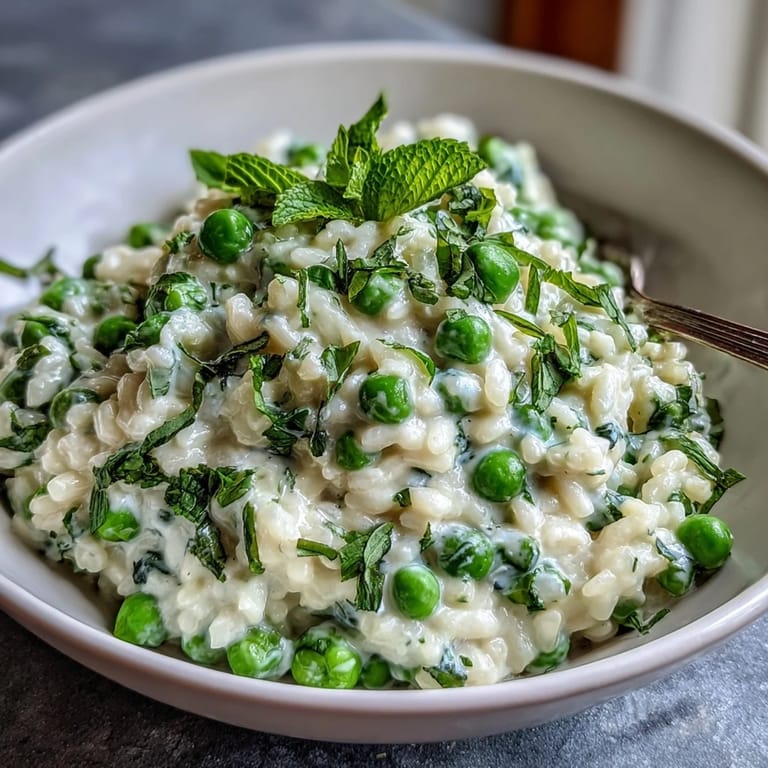 Save
Save There's a moment near the end when you first smell the mint and lemon hitting the warm rice, and you know you're about to make people happy. That small alchemy of timing and attention—knowing when to stir, when to wait, when to let the heat do its work—is where risotto becomes less about following instructions and more about understanding the dish itself.
Why This Tastes Like Spring
Green peas and fresh mint are the flavor combination that makes people close their eyes and smile. Peas bring sweetness and a tender texture, while mint adds something cool and alive that cuts through the richness of the butter and cheese. Together with lemon zest, they transform risotto from a winter comfort dish into something that tastes like garden air, like the exact moment when the season finally changes.
Timing and Temperature Matter More Than You Think
The reason this dish impresses people is because it arrives at the table hot and creamy, not cooled or separated. If your stock isn't warm, the rice cooks unevenly and seizes. If you stop stirring, the bottom can scorch and the texture becomes grainy instead of silky. But when you stay present with the pan and listen to what it's asking for—more heat, less heat, more stock—everything comes together naturally.
Elevating the Finish and Serving
The last 30 seconds of cooking is where risotto becomes memorable instead of just good. Finishing with cold butter (we call it mounting) creates an emulsion that makes everything glossy and luxurious. Fresh mint stirred in at the end stays fragrant instead of becoming muted, and lemon zest adds brightness right when people need it most. If you have really good olive oil, a small drizzle just before serving adds another layer of flavor without overwhelming the delicate herb notes.
- Grate your Parmesan fresh and use the box grater's smallest holes so it melts into the risotto instead of clumping.
- If you're cooking for guests, have your stock simmering in another pot so you can add it ladle by ladle without breaking your rhythm.
- Serve in warm bowls so the risotto stays at the perfect temperature from your plate to your mouth.
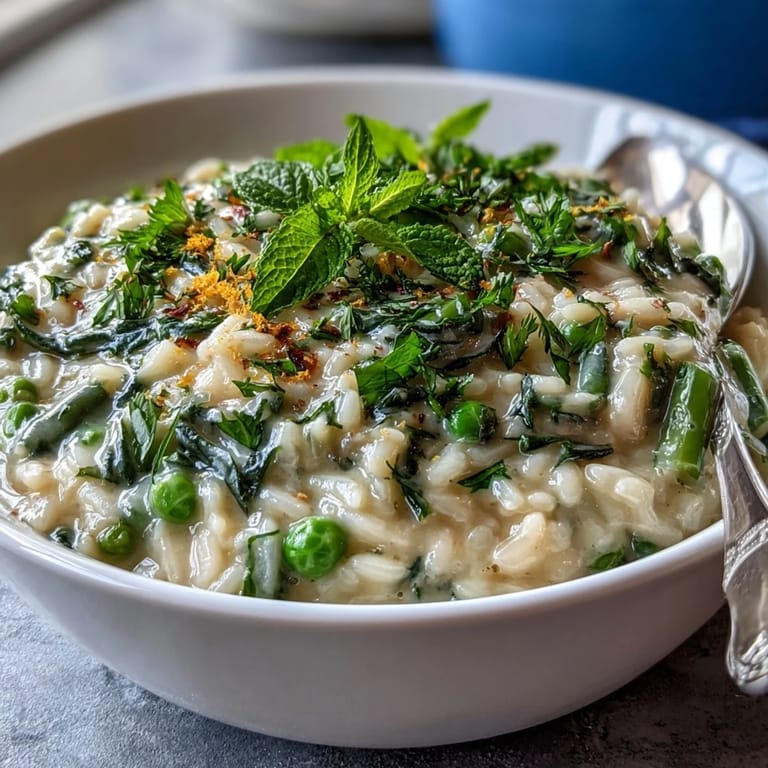 Save
Save This risotto is the kind of dish that rewards attention without demanding perfection. Cook it with intention, trust your senses, and you'll create something that tastes like spring and care.
Recipe FAQs
- → What type of rice is best for this dish?
Arborio rice is ideal due to its high starch content, which creates the creamy texture essential for risotto.
- → Can frozen peas be used instead of fresh?
Yes, frozen peas can be substituted. Add them towards the end of cooking to maintain their vibrant color and tenderness.
- → How do I know when the risotto is done?
The rice should be al dente—tender but with a slight bite—and the overall texture creamy but not soupy.
- → What wine pairs well with this dish?
A crisp white wine such as Sauvignon Blanc or Pinot Grigio complements the fresh peas and Parmesan elegantly.
- → Can I make this dish vegan?
To make a vegan version, substitute butter with a plant-based alternative and omit or replace Parmesan with a vegan-friendly cheese.
- → Why is white wine added during cooking?
The white wine adds acidity and depth of flavor, helping to balance the creaminess of the dish.