 Save
Save There's something about the sizzle of chicken hitting hot oil that brings back a Saturday afternoon at my aunt's kitchen in New Jersey, the kind of place where the smell of garlic and tomato sauce seemed to live permanently in the walls. She taught me that Chicken Parmesan isn't about being fancy—it's about that satisfying contrast between the crispy golden crust and the soft, cheese-covered center, the moment when you cut into it and everything is still steaming. That day, I burned the first batch while getting distracted by her stories, but the second attempt was perfect, and somehow that made it taste better.
I made this for a small dinner party once, and my friend who claims he doesn't like tomato sauce came back for thirds—he spent the whole meal asking what made the sauce taste different. The answer was just taking two extra minutes to sauté the garlic until it was fragrant before adding the rest, a small thing that somehow changed everything.
Ingredients
- Boneless, skinless chicken breasts (4): Look for ones that are roughly the same thickness so they cook evenly; if one is noticeably thicker, it'll dry out before the thin one cooks through.
- All-purpose flour (1 cup): This is your first line of defense, creating the base that helps the egg wash stick; don't skip it or you'll get a bare spot where the breadcrumbs don't adhere.
- Eggs (2 large) and milk (2 tablespoons): The egg wash is what binds everything together, and the milk makes it flow smoothly so you're not wrestling with thick, clumpy coating.
- Breadcrumbs, preferably Italian-style (1 1/2 cups): Italian breadcrumbs have herbs already mixed in, which means less work and more flavor; panko works too if that's what you have, though it'll be crunchier.
- Grated Parmesan cheese (1/2 cup for breading, 1/4 cup for topping): This is where the umami lives—freshly grated tastes infinitely better than the pre-grated stuff that's coated with cellulose to keep it from clumping.
- Marinara sauce (2 cups): Use whatever you have on hand; homemade is wonderful, but good store-bought sauce won't let you down if you're short on time.
- Garlic (2 cloves, minced): This small amount transforms the sauce from one-dimensional to complex; mince it fine so it distributes evenly and doesn't burn.
- Olive oil (1 tablespoon for sauce, more for frying): You'll need enough oil in the skillet to create that golden crust; don't be shy with it here.
- Dried oregano and basil (1 teaspoon each): These are gentle enough that you can taste the tomato but bold enough to round out the flavor, and they perfume the whole dish.
- Mozzarella cheese, shredded (1 1/2 cups): Shred it yourself if you can; it melts more smoothly than pre-shredded cheese because it doesn't have the anti-caking agents.
- Spaghetti or linguine (350 g): Use whichever pasta you prefer or have in the pantry; the sauce clings beautifully to both.
- Fresh basil leaves (optional): Save these for garnish at the very end so they taste bright and fresh, not cooked down and dull.
Tired of Takeout? 🥡
Get 10 meals you can make faster than delivery arrives. Seriously.
One email. No spam. Unsubscribe anytime.
Instructions
- Get your oven ready and set the stage:
- Preheat to 400°F and line your baking sheet or dish with parchment paper or a light coating of oil. You want to be ready to go once the chicken is breaded, so don't skip this step or you'll be frantically wiping oil around while your breaded cutlets sit getting soggy.
- Pound the chicken to even thickness:
- Place each breast between two sheets of plastic wrap and pound it to about 1/2 inch thick using even, firm strokes—this is satisfying in its own way, and it ensures everything cooks at the same rate. Season generously with salt and pepper on both sides, tasting it in your head like you would a piece of the final dish.
- Set up your breading station:
- Three bowls in a row: flour in the first, beaten eggs mixed with milk in the second, and breadcrumbs combined with 1/2 cup of Parmesan in the third. This assembly-line approach is meditative and prevents you from scrambling halfway through.
- Bread each cutlet with intention:
- Dredge in flour until coated, tap off excess, dip in egg wash letting the surplus drip back into the bowl, then coat in breadcrumbs and press gently so they stick. The pressure matters—too gentle and they'll fall off, too hard and you'll compress everything.
- Fry until golden brown:
- Heat olive oil in a large skillet over medium-high heat until it shimmers, then carefully lay in the breaded chicken and listen for that satisfying sizzle. Fry for 2–3 minutes per side until the crust is deep golden, working in batches so you don't overcrowd the pan and steam instead of fry.
- Build the sauce with care:
- In a saucepan, heat 1 tablespoon olive oil and sauté minced garlic for about 1 minute until it smells incredible but hasn't started to brown. Add marinara sauce, oregano, and basil, then let it simmer gently for 5 minutes so the herbs release their oils and marry with the tomato.
- Assemble for baking:
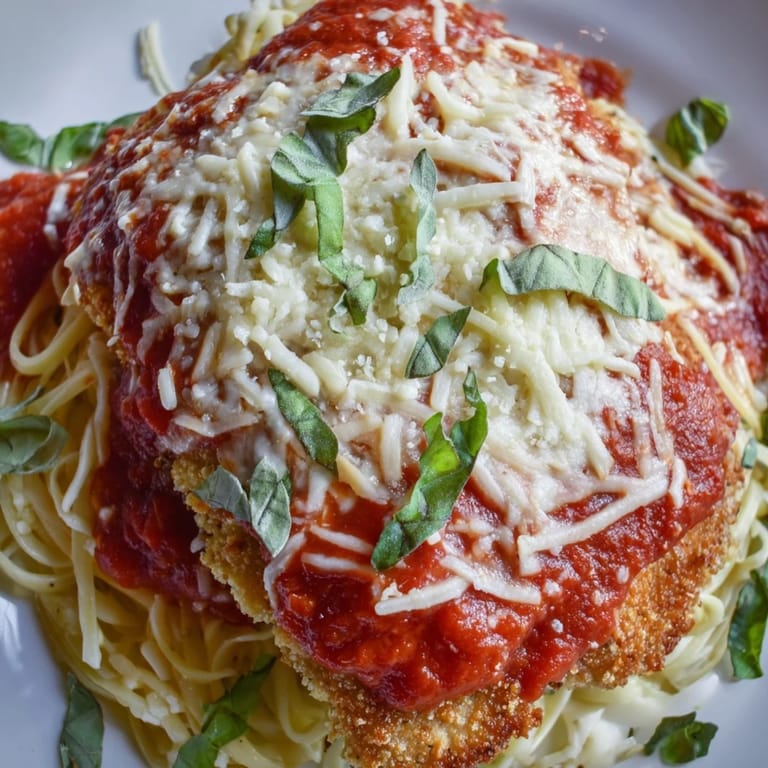
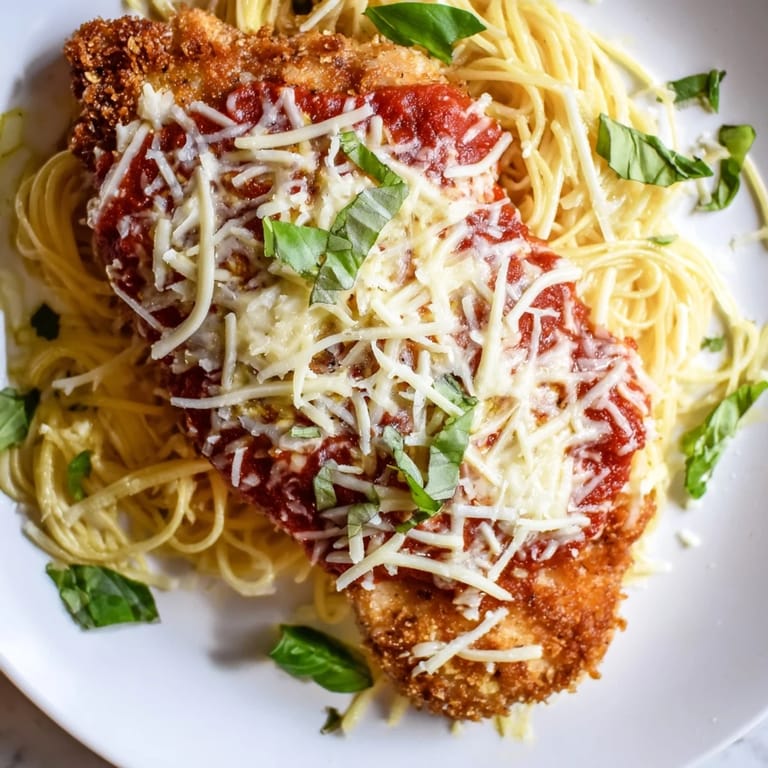
- Spread 1/2 cup of sauce on the bottom of your baking dish, arrange the fried chicken in a single layer, then top each piece with remaining sauce, mozzarella, and extra Parmesan. The sauce underneath prevents sticking, and the double cheese creates those irresistible brown spots.
- Bake until the cheese bubbles:
- Slide into the oven for 15–20 minutes, watching until the cheese is bubbly and the chicken reads 165°F on an instant-read thermometer. The cheese should be golden in spots and definitely melted all the way through.
- Cook your pasta while the chicken finishes:
- In a pot of salted boiling water, cook spaghetti or linguine according to package directions, then drain and keep warm. The sauce needs somewhere to land, and this timing ensures everything comes together hot.
- Plate and finish:
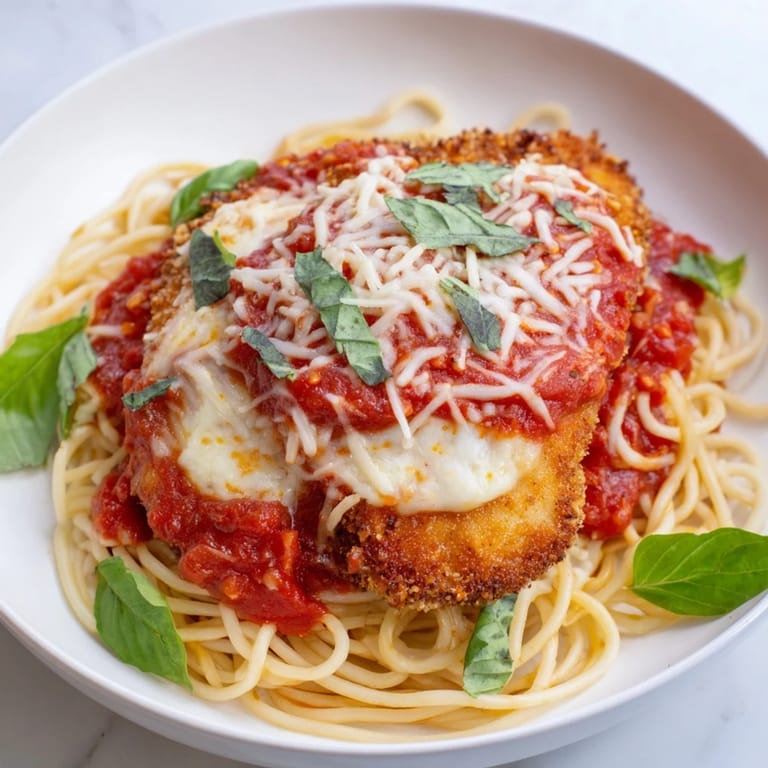
- Twirl or serve pasta onto plates, top with a cutlet and extra sauce, and finish with fresh basil and a little more Parmesan if you're feeling generous. This last flourish of fresh green is what makes people remember the meal.
 Save
Save The moment I realized this dish had become something special was when my kid asked for seconds without being prompted and spent the whole meal talking about the crispy part. It stopped being a recipe I was following and became the thing we made together, splashing sauce on aprons and deciding that next time we'd add a pinch of red pepper flakes.
The Secret of the Crust
The difference between forgettable breaded chicken and the kind that stays with you is all about temperature and oil. Too low and it absorbs oil instead of crisping; too high and it burns outside while staying raw inside. I found the sweet spot by letting the oil heat for a full minute until it shimmers, and then watching the first piece carefully to see when the bubbling around the edges shifts from aggressive to gentle—that's when you know you're in the zone.
The Sauce as the Foundation
Most people think the chicken is the star, but honestly, a mediocre sauce can sabotage everything. The garlic matters—it shouldn't be raw or burnt, just softened and fragrant. The dried herbs need time to bloom, which is why I let the sauce simmer for those five minutes even though it feels like a small thing. And tasting as you go, adjusting salt and adding a pinch of sugar if the tomatoes are too acidic, is the difference between a dish that tastes good and one that tastes intentional.
Making It Your Own
This recipe is wonderfully forgiving once you understand the fundamentals, and there's so much room to experiment without ruining it. I've added red pepper flakes for heat, stirred in fresh spinach under the cheese, and even topped it with crispy breadcrumbs that didn't go on the chicken for extra texture. The structure stays the same; the personality is yours to add.
- A pinch of red pepper flakes in the sauce gives it a gentle heat that builds as you eat without overpowering the tomato.
- If you're avoiding gluten, swap the flour and breadcrumbs for gluten-free versions and the method stays exactly the same.
- Serve it with a simple salad on the side and a glass of Chianti, and you've got the kind of meal that feels like an occasion even if it's just a Tuesday night.
 Save
Save This is the kind of dish that reminds you why people cook at all—something that takes less than an hour and tastes like you spent the whole afternoon on it. Serve it to people you like, watch their faces when they take that first bite, and let it become one of your things.
Recipe FAQs
- → How do I get the chicken cutlets crispy?
Coat the chicken in flour, egg, and a mix of breadcrumbs with grated Parmesan. Fry in hot olive oil until golden brown on both sides before baking.
- → What pasta pairs well with this dish?
Spaghetti or linguine works best, cooked al dente and served warm beneath the baked chicken cutlets.
- → Can I make the tomato sauce from scratch?
Yes, sauté garlic in olive oil, add marinara sauce with oregano and basil, then let it simmer for enhanced flavor.
- → How long should the dish bake?
Bake at 400°F (200°C) for 15–20 minutes until cheese is bubbly and chicken reaches an internal temperature of 165°F (74°C).
- → Are there any suggested variations?
Add red pepper flakes to the sauce for heat or substitute gluten-free breadcrumbs and flour for dietary needs.