 Save
Save One Tuesday evening, my neighbor stopped by just as I was staring blankly into my fridge, wondering what could possibly come together in under 30 minutes. She spotted a jar of gochujang on my shelf and said, "Make that Korean beef bowl thing," like it was the most obvious solution in the world. I'd never attempted it before, but something about her confidence made me trust the process. Twenty-five minutes later, we were both eating straight from the same bowl, and I realized I'd just discovered my new weeknight savior.
I made this for my sister's surprise lunch visit, and she took one bite, then just looked up at me with this expression of betrayal that I'd been holding out on sharing this recipe. She'd always assumed Korean food required hours of prep work and mysterious ingredients she couldn't pronounce. Watching her grab seconds while asking a million questions about gochujang made me understand the real power of this bowl wasn't just the flavor, it was making something feel restaurant-quality in your own kitchen.
Ingredients
- Lean ground beef: At 1 pound, this amount browns beautifully without creating excess grease, especially if you drain it well after cooking.
- Gochujang (Korean chili paste): This is your umami bomb, the ingredient that makes people ask what that incredible depth of flavor is; buy it from the Asian aisle and keep it forever.
- Low-sodium soy sauce or tamari: Use tamari if you're avoiding gluten, and honestly, the low-sodium version prevents the whole dish from becoming unbearably salty.
- Brown sugar: Just two tablespoons balances the heat and saltiness, creating that sweet-savory complexity that keeps you coming back for more.
- Sesame oil: One tablespoon is enough to perfume the entire dish; don't skip this or substitute with regular oil.
- Fresh garlic and ginger: Minced and grated fresh, not powdered; this is where the brightness lives.
- Rice vinegar: Adds a subtle tang that cuts through the richness without being obvious about it.
- White or cauliflower rice: Choose based on your mood; cauliflower rice keeps it lighter and lower-carb without sacrificing satisfaction.
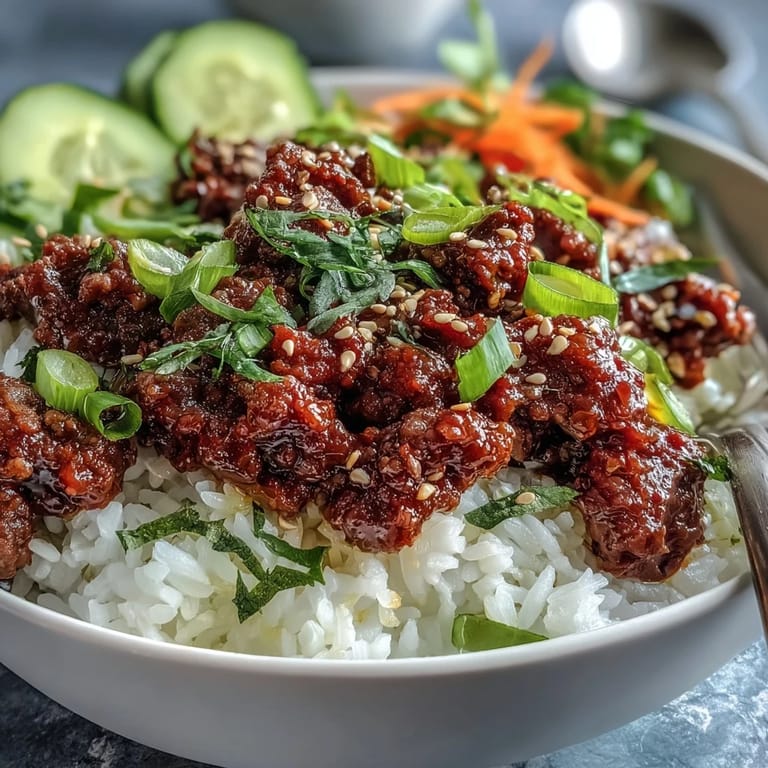
- Fresh toppings (cucumber, carrot, green onions): These aren't just garnish; they're essential textural contrast that makes each bite feel intentional and complete.
- Toasted sesame seeds: Buy them already toasted to save a step, and they add a nutty crunch that elevates the whole experience.
Tired of Takeout? 🥡
Get 10 meals you can make faster than delivery arrives. Seriously.
One email. No spam. Unsubscribe anytime.
Instructions
- Heat your oil and brown the beef:
- Pour sesame oil into a large skillet over medium-high heat; you'll know it's ready when it shimmers and releases that toasted aroma. Add ground beef and break it into small pieces with your spatula, cooking for 4 to 5 minutes until it's browned all the way through and loses any pink.
- Build the aromatics:
- Add minced garlic and grated ginger, stirring constantly for about a minute until your kitchen smells like a Korean restaurant and the raw edge disappears.
- Create the sauce:
- Stir in gochujang, soy sauce, brown sugar, rice vinegar, and black pepper all at once, mixing until the sauce coats every piece of beef. Let it simmer for 2 to 3 minutes; you'll see it thicken slightly and the flavors marry together beautifully.
- Taste and adjust:
- This is crucial: taste it now and decide if you need more heat, more salt, or more sweetness. It's your bowl, so make it exactly how you want it before removing from heat.
- Assemble your bowls:
- Divide your cooked rice or cauliflower rice among bowls, giving each one a generous base. Spoon the beef and sauce over top, letting it nestle into the rice.
- Crown with freshness:
- Layer cucumber slices, shredded carrot, green onions, and toasted sesame seeds across the top. Add thin chili slices if you want extra heat, or a spoonful of kimchi if you want funky depth.
 Save
Save Last month I made this for a dinner party where one guest mentioned she couldn't eat spicy food, so I made a mild version and suddenly everyone wanted that version instead of the original. It taught me that this bowl is flexible enough to please almost anyone without losing its soul, which honestly might be the greatest compliment a 25-minute dish can receive.
Why This Sauce Works So Well
Gochujang gets all the attention, but it's the combination of soy sauce, brown sugar, and rice vinegar that makes the magic happen. The soy brings saltiness and umami, the brown sugar adds sweetness that balances heat, and the rice vinegar provides acidity that keeps everything from feeling heavy or one-dimensional. Together, they create a sauce that tastes complex enough to impress people while remaining simple enough that you're not standing over the stove second-guessing yourself.
Rice versus Cauliflower Rice: Which Should You Choose
Regular white rice is the traditional choice and honestly creates the most satisfying bowl because it soaks up every drop of that beautiful sauce. Cauliflower rice works equally well if you're watching carbs or just want something lighter, though it won't absorb sauce quite as thoroughly. My approach is to decide based on what I'm in the mood for that particular day, though I'll admit that nothing quite matches the comfort factor of a rice-based version.
The Toppings Are Your Finishing Canvas
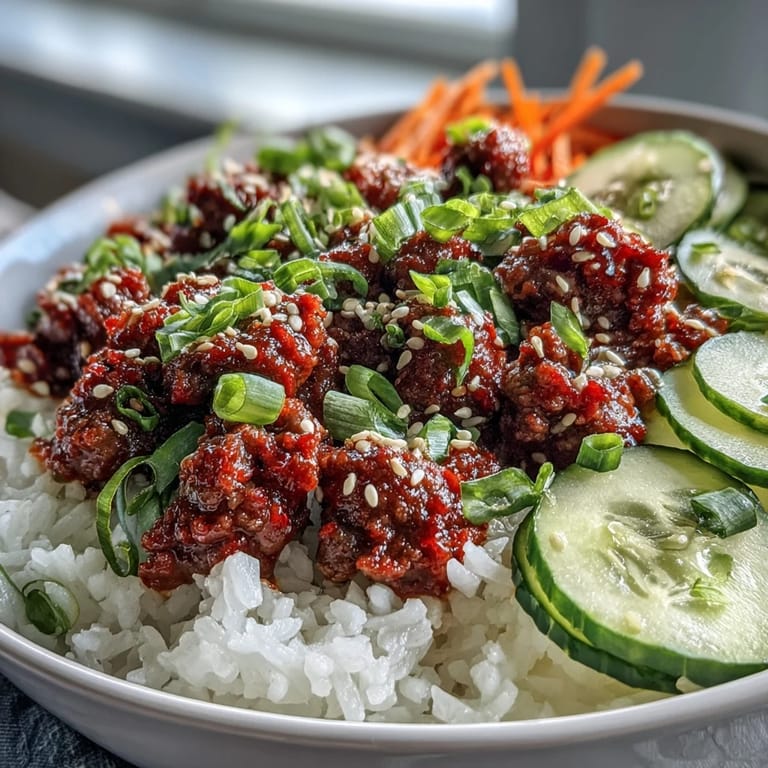
Those fresh garnishes aren't decoration; they're essential to how the bowl tastes and feels. The cool crispness of cucumber and carrot against the warm beef and sauce creates temperature and texture contrast that makes eating it feel intentional rather than habitual. Green onions add a subtle onion bite, sesame seeds bring nuttiness, and if you're feeling bold, thin chili slices or kimchi push everything into more adventurous territory. Mix and match based on what's in your crisper drawer and how you're feeling.
- Keep your cucumber and carrot thin so they don't overwhelm the other components and stay refreshingly crisp.
- Toast your own sesame seeds if you have five minutes, or buy them pre-toasted because that nutty flavor truly elevates the whole experience.
- Don't skip the green onions; they brighten everything up and prevent the bowl from feeling too heavy.
 Save
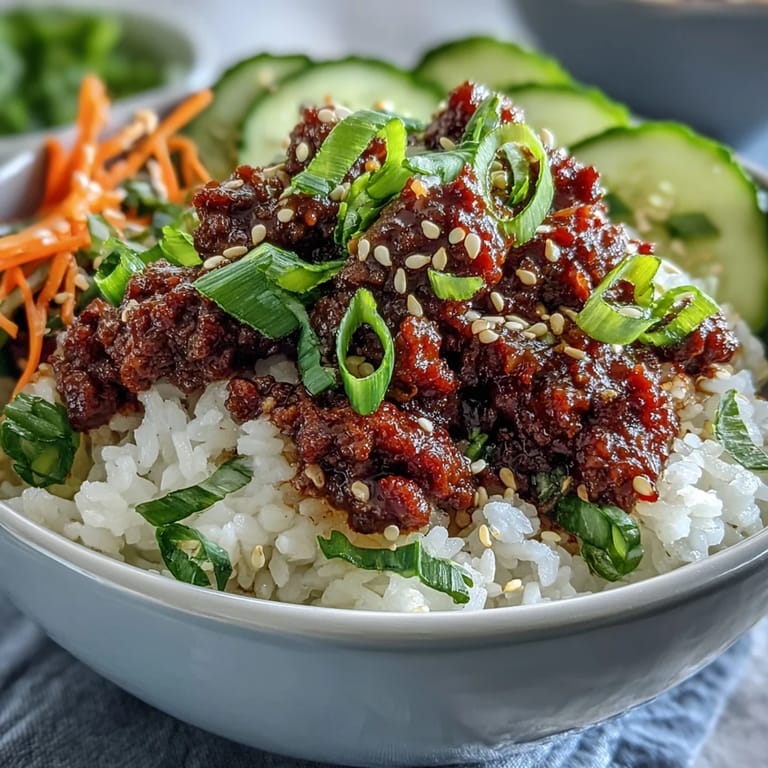
Save This bowl has become my emergency dinner, my show-off meal, and my comfort food all rolled into one. It reminds me that the best meals often happen when you stop overthinking and just trust the ingredients in front of you.
Recipe FAQs
- → What does gochujang taste like?
Gochujang is a Korean fermented chili paste with a complex flavor profile. It's savory, slightly sweet, and delivers moderate heat with deep umami notes from fermentation. The taste is often described as a balance between miso and hot sauce, with a pleasant sweetness from the rice malt used in its production.
- → Can I make this dish spicier?
Absolutely. Increase the amount of gochujang, add sliced fresh chili peppers, or drizzle sriracha over the finished bowl. You can also incorporate Korean red pepper flakes (gochugaru) into the sauce mixture while it simmers for an extra layer of heat.
- → What can I use instead of ground beef?
Ground turkey or chicken work beautifully as lighter alternatives. You can also use crumbled tofu for a vegetarian version, though you'll want to increase the sauce ingredients to ensure plenty of flavor. Plant-based ground meat substitutes also work well in this dish.
- → How do I store leftovers?
Store the beef mixture and rice separately in airtight containers in the refrigerator for up to 4 days. Reheat the beef gently in a skillet over medium heat, adding a splash of water if the sauce has thickened too much. Fresh toppings are best added just before serving.
- → Is this dish gluten-free?
The dish can easily be made gluten-free by using tamari instead of soy sauce and ensuring your gochujang is certified gluten-free. Some traditional gochujang brands contain wheat, so check labels carefully. Serve over cauliflower rice for a completely grain-free, low-carb meal.
- → What other toppings work well?
Fresh options include sliced radishes, shredded cabbage, bean sprouts, or avocado for creaminess. A fried egg on top adds richness, while pickled vegetables provide tang contrast. Kimchi is a classic accompaniment that adds probiotics and authentic Korean flavor.