 Save
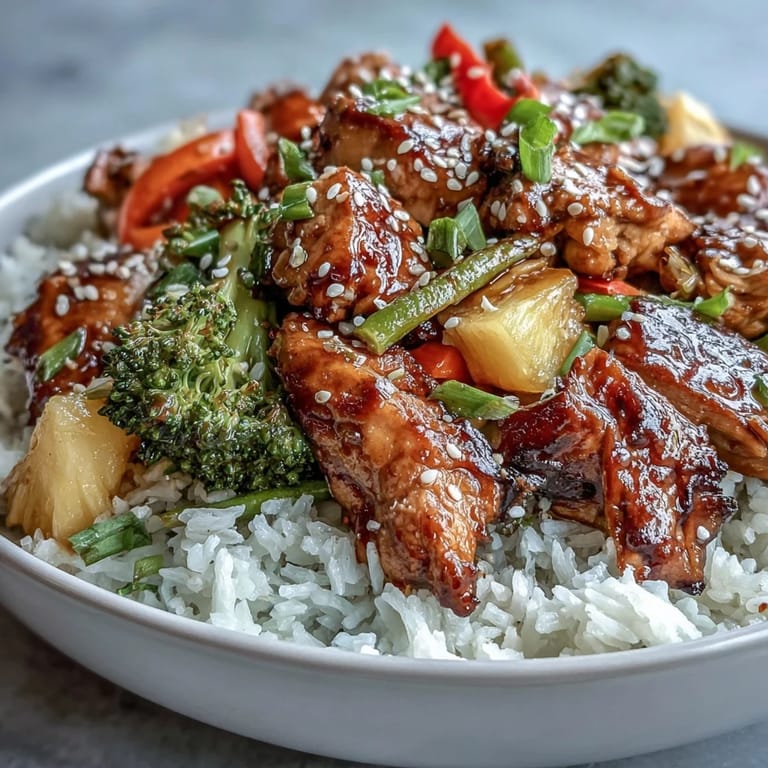
Save A few years back, my coworker brought teriyaki chicken to a potluck and I watched people abandon their own dishes to hover around hers. The kitchen smelled like caramelized soy and ginger, and honestly, I felt a little betrayed that I hadn't thought of it first. That night I went home determined to reverse-engineer her recipe, and what I landed on is this bowl—glossy chicken, crisp vegetables, fluffy rice, and that unexpected brightness from fresh pineapple that makes everything feel a little bit special.
I made this for my roommate on a random Tuesday when she came home stressed from work, and watching her face light up as she took that first bite reminded me why I love cooking. She asked for the recipe immediately, and now it's something we text about whenever we've had a rough day—like we're in on a secret together about what makes things better.
Ingredients
- Chicken thighs or breasts (1.5 lbs): Thighs stay juicier than breasts, but either works—just don't skip the bite-sized pieces or they'll take forever to cook through.
- Soy sauce (1/3 cup): This is the backbone of your sauce, so don't use the cheap stuff if you can help it.
- Mirin (1/4 cup): It's that magical Japanese ingredient that adds sweetness without making things cloying—worth tracking down at an Asian market or online.
- Brown sugar and honey (2 tbsp each): Together they build layers of sweet that balance the salt, and honey adds a subtle depth you won't quite identify but will absolutely notice if it's missing.
- Rice vinegar (1 tbsp): This keeps the sauce from tasting one-dimensional and adds a whisper of brightness that ties everything together.
- Garlic and ginger (2 cloves and 1 tsp): Fresh is non-negotiable here—the minced garlic should be sharp enough to make you pause, and ginger should be fragrant enough to cut through the sweetness.
- Sesame oil (1 tsp): A little goes a long way, and it's what gives this that authentic depth that bottled teriyaki sauce can never quite capture.
- Cornstarch slurry (1 tbsp cornstarch + 2 tbsp water): This is your secret weapon for getting that glossy, restaurant-quality sauce that clings to the chicken instead of pooling at the bottom.
- Jasmine or short-grain rice (2 cups): Jasmine is more fragrant, short-grain is more forgiving—pick whichever you prefer, but rinse it first or it'll turn gluey.
- Broccoli, carrots, bell pepper, snap peas (1 cup each): These vegetables stay bright and crisp when you stir-fry them quickly over high heat—overcooking them even by a minute changes everything.
- Fresh pineapple (1 cup diced): This is the twist that makes people wonder what's different about your version—it adds sweetness and acid and something almost tropical that elevates the whole bowl.
- Scallions and sesame seeds: These aren't just garnish; they add texture and freshness that makes the first bite as good as the last.
Tired of Takeout? 🥡
Get 10 meals you can make faster than delivery arrives. Seriously.
One email. No spam. Unsubscribe anytime.
Instructions
- Start your rice first:
- Rinse the rice under cold water, rubbing it gently between your fingers until the water runs clear—this removes the starch that makes it sticky. Combine rice, water, and a pinch of salt in a saucepan, bring it to a boil, then reduce heat to low, cover, and let it steam for 15 minutes without peeking.
- Build your sauce while the rice cooks:
- Whisk together soy sauce, mirin, brown sugar, honey, rice vinegar, minced garlic, grated ginger, and sesame oil in a small bowl. The mixture should smell complex and layered—if it's just salty, you know something's off.
- Let the chicken marinate:
- Pour half of the sauce over bite-sized chicken pieces and toss until everything's coated. Even just 10 minutes makes a difference; the chicken starts to absorb the flavors while you prep the vegetables.
- Get your vegetables ready:
- Heat vegetable oil in a large skillet or wok over medium-high heat until it shimmers. Add broccoli, carrots, bell pepper, and snap peas, stirring constantly for 3 to 4 minutes until they're crisp-tender—you want them to have some bite, not be soft.
- Cook the chicken until it's golden:
- In the same pan (don't wash it), add the marinated chicken and cook for 6 to 8 minutes, stirring occasionally, until the pieces are browned on the outside and cooked through. You'll see the sauce starting to caramelize on the edges, which is exactly what you want.
- Create your glossy finish:
- Pour the remaining sauce into the pan, then stir the cornstarch with water to make a slurry and add it in. Simmer for 2 to 3 minutes, stirring gently, until the sauce thickens and clings to the chicken like a silky coat.
- Bring it all together:
- Fluff the rice with a fork (it should have been resting for 10 minutes by now), divide it among four bowls, and top with the teriyaki chicken, stir-fried vegetables, and diced pineapple. Sprinkle scallions and sesame seeds over everything.
 Save
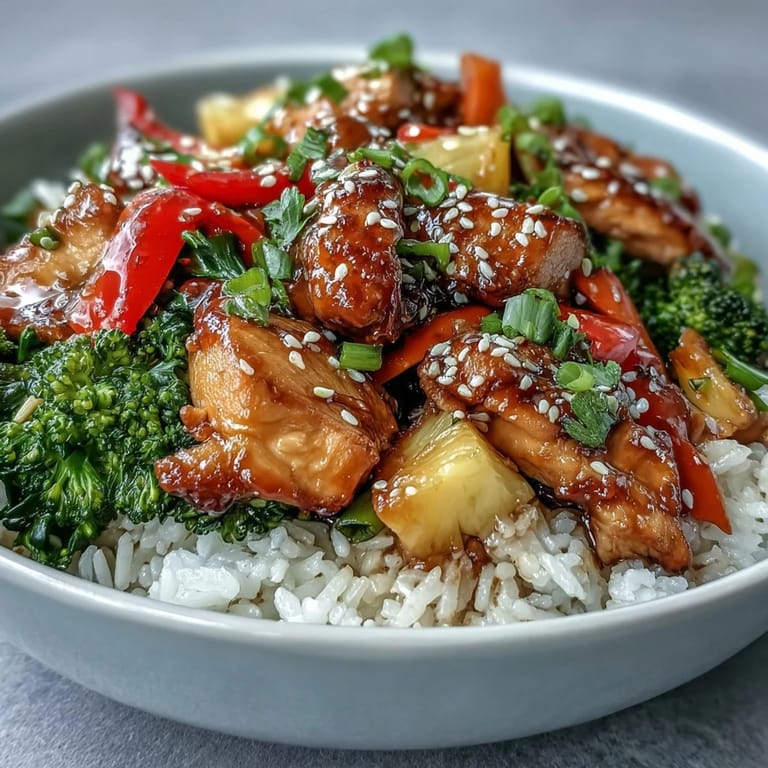
Save There's something almost meditative about watching the sauce transform from liquid to glossy, the way it catches the light as it coats the chicken. It's the moment when you know you've nailed it, when everything that seemed like separate components suddenly becomes something whole.
Why Fresh Pineapple Makes All the Difference
I used canned pineapple once thinking it was basically the same, and the bowl felt flat—missing something I couldn't quite name until I tried it again with fresh. The acidity and brightness of fresh pineapple cuts through the richness of the sauce in a way that canned just can't compete with, and the texture adds something unexpected that makes people pause mid-bite and wonder what they're tasting.
The Secret to Restaurant-Quality Rice
Most people skip the rinsing step because it feels unnecessary, but once you taste rice that's been properly rinsed versus rice that hasn't, you'll never go back. The difference is the difference between rice that sticks together in an unpleasant way and rice that's fluffy and separate, where each grain stands on its own. The 10-minute rest after cooking matters too—it lets the steam finish doing its job and makes fluffing it a breeze instead of a mess.
Customizing This Bowl to Your Taste
The beauty of this dish is how adaptable it is without losing what makes it work. Tofu or tempeh swap in seamlessly for the chicken if you're cooking vegetarian, and vegetables are genuinely flexible—mushrooms, zucchini, and baby corn all work beautifully. Some people drizzle sriracha or chili oil over the finished bowl for heat, and honestly, that's not wrong.
- If you can't find mirin, use equal parts honey and rice vinegar as a substitute, though the flavor won't be exactly the same.
- Double the sauce recipe if you like things glossier and more coated—this is one of those dishes where more sauce is rarely a bad call.
- Make the sauce a day ahead to let the flavors settle and deepen; it actually tastes better the next day.
 Save
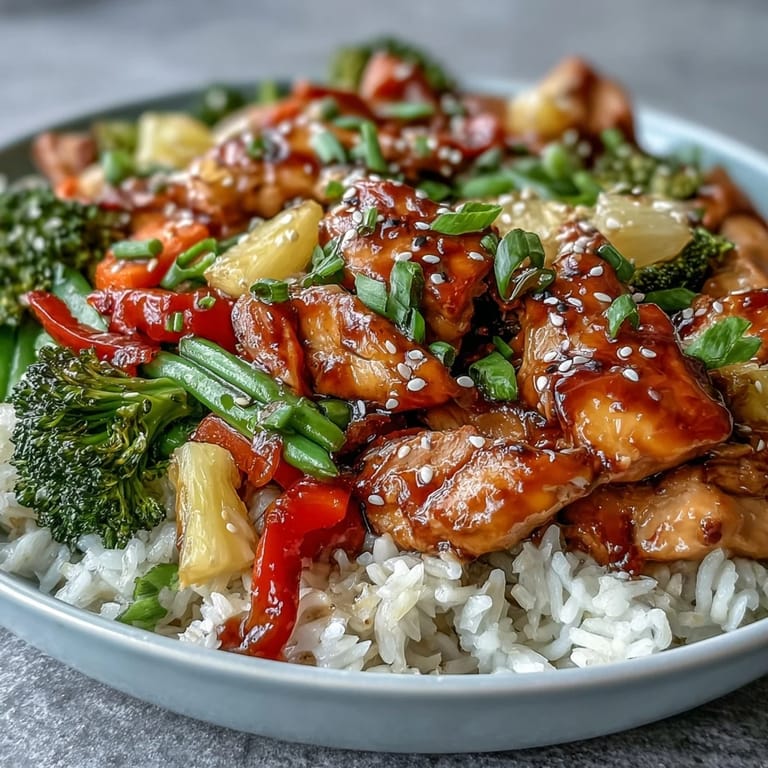
Save This bowl has become my go-to when I want to cook something that feels special without being complicated. It's the kind of dish that makes you feel like you've unlocked something in your kitchen, and honestly, once you've made it a few times, you'll find yourself making it on autopilot because you know it's going to land.
Recipe FAQs
- → Can I make this vegetarian?
Yes, substitute the chicken with firm tofu or tempeh. Press the tofu to remove excess moisture, then marinate and cook the same way as the chicken. The teriyaki sauce works wonderfully with plant-based proteins.
- → What type of rice works best?
Jasmine rice or short-grain white rice are ideal choices for their fluffy texture and ability to absorb the teriyaki sauce. Brown rice also works well but will require a longer cooking time and additional water.
- → Can I prepare the sauce in advance?
Absolutely. The teriyaki sauce can be made up to a week ahead and stored in an airtight container in the refrigerator. The cornstarch slurry should be added fresh when cooking for the best thickening results.
- → How do I get the sauce thick and glossy?
The key is the cornstarch slurry mixed with cold water. Add it to the simmering sauce and stir constantly for 2-3 minutes. The sauce will thicken beautifully and coat the chicken evenly.
- → What vegetables can I substitute?
Feel free to use mushrooms, zucchini, baby corn, snow peas, or bok choy. The key is to cut vegetables into similar-sized pieces so they cook evenly and maintain their crisp-tender texture.
- → Is the pineapple necessary?
While optional, the fresh pineapple provides a lovely sweetness that complements the salty-savory teriyaki sauce. If you prefer, mango or even mandarin oranges make excellent alternatives.